


Wire Pay Off Spooling Unit
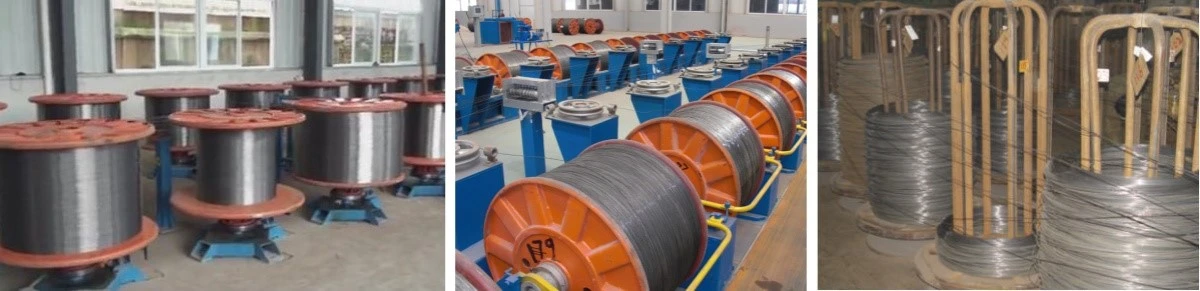
Passive Wire Pay-off
Name: Passive I Beam Wire Pay Off Stand
Overview:
It is suitable for wire pay off in electro galvanizing and hot dip galvanizing wire production lines. The equipment consists of a rotating base and a pay off stand. The rotating base is equipped with a tensioning device to control the wire pay off tension, and the pay off stand can be freely replaced during production.
Active Wire Pay-off
Name: Active I Beam Spool Pay Off Equipment
Overview:
The equipment adopts an accumulator type pay off unit to ensure stable wire tension without looseness. The wire accumulation time is not less than 3 minutes, allowing the I beam spool to be replaced without stopping the production line. The spool replacement is simple and convenient to operate. The electrical control system is installed in an independent control cabinet together with the take up unit electrical system. The pay off and take up units are interlocked and the wire tension is automatically tracked and adjusted during operation.
Wire Pay-off Specifications
The equipment is customized according to the type of wire products and the production line speed required by the user.
Application Parameters for Wire Pay-off
|
Application Position |
Material |
Applicable Spool Diameter Range |
|
Wire Pay-off |
Metal |
Φ800~Φ1100 (mm) |
Heat Treatment Furnace
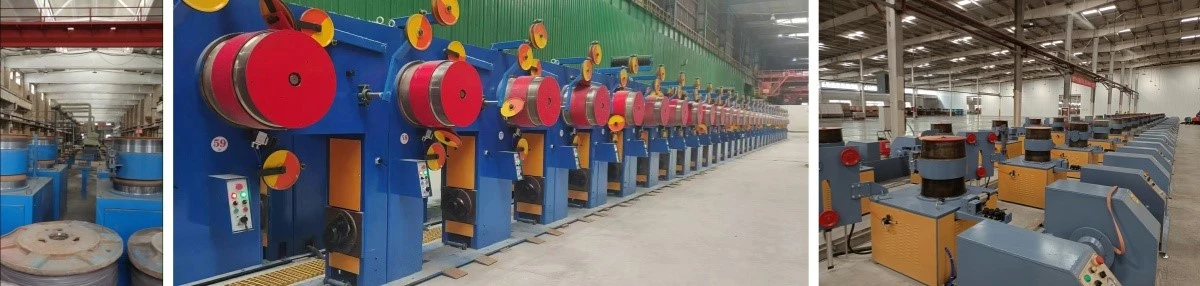
Name: Online Wire Heat Treatment Furnace For Electro galvanized Wire Equipment
Specification: The equipment is customized according to the type of wire products and the production line speed required by the user.
Overview:
This furnace is suitable for the online heat treatment process of low carbon wire. In order to ensure stable mechanical properties of the steel wire, the furnace adopts a box type structure with reinforced insulation layers on the furnace walls and roof, ensuring uniform and stable temperature control in the heating chamber. The heat treatment furnace is equipped with multiple heating and temperature measuring points, and the temperature is automatically controlled by a PID system. The process temperature of the heat treatment furnace is controlled within the range of 650 to 850 degrees Celsius.
Application Parameters
|
Application |
Construction Material |
Energy Source |
DV Value |
Wire Diameter Range |
|
Wire Heat Treatment |
Metal + Insulation |
Electricity / Natural Gas / Coal Gas |
40–200 mm·m/min |
Φ0.8–Φ8.0 mm |

Temperature Controlled Cleaning Tank
Name: Temperature Controlled Cleaning Tank For Electro galvanized Wire Equipment
Specification: The equipment is customized according to the type of wire products and the production line speed required by the user.
Overview:
The tank body is fabricated by welding 304 stainless steel. In order to quickly and efficiently remove residual impurities from the steel wire surface, the tank adopts a two stage overflow cleaning system with independent circulation and a counter flow water supply and drainage method. Two overflow trays are installed and each tray is equipped with a corrosion resistant vertical pump with a motor power of 0.55 kW to provide overflow power. During the overflow cleaning process, water enters the cleaning tray in the form of jet flow. The cleaning water can be recycled, which reduces water consumption during the cleaning process and decreases wastewater discharge.
To prevent cleaning water from being carried into the next process, the outlet of the cleaning tank is equipped with interception stones and a back blowing air knife with a 5.5 kW blower to remove residual cleaning water from the steel wire surface. The equipment is designed as a fully enclosed structure with an openable threading cover and a reserved air inlet for connection to a purification tower.
Application Parameters
|
Application Position |
Material |
Energy Source |
DV Value |
Applicable Wire Diameter Range |
|
Electroplating Tank |
Stainless Steel |
Electricity |
20–80 mm·m/min |
Φ0.8–Φ8.0 (mm) |
Pickling Tank
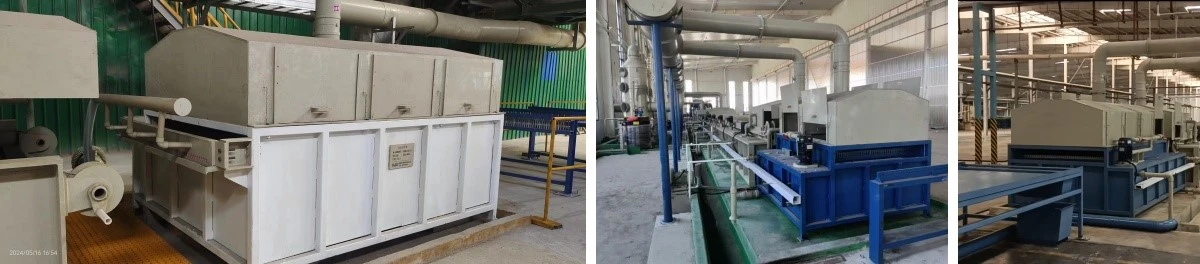
Name: Online Wire Hydrochloric Acid Pickling Tank
Specification: The equipment is customized according to the type of wire products and the production line speed required by the user.
Overview:
The integrated pickling tank is made of PP material. During operation, the wire travels in a straight path through the tank, which adopts an overflow design. The water curtain system is equipped with two corrosion resistant pumps with a power of 4.0 kW, while the pickling tank is fitted with six acid resistant pumps with a power of 0.55 kW to provide acid circulation and overflow.
Both the inlet and outlet of the tank are sealed with double water curtains, and groove sealing is applied on both sides to effectively prevent acid mist from escaping. To ensure rapid removal of surface oxides and meet the high-speed requirements of the galvanizing process, the process solution is circulated by acid resistant pumps, allowing continuous rinsing of the wire with hydrochloric acid to achieve the required pre-galvanizing surface cleanliness.
To reduce acid consumption and prevent carryover into the next process, the outlet of the tank is equipped with interception bars and a back blowing wiping device to remove residual acid from the wire surface.
Application Parameters
|
Application Position |
Material |
Energy Source |
DV Value |
Applicable Wire Diameter Range |
|
Wire Pre Treatment Cleaning |
PP Plate and Stainless Steel |
Electricity |
40–200 mm·m/min |
Φ0.8–Φ8.0 (mm) |
Water Rinsing Tank
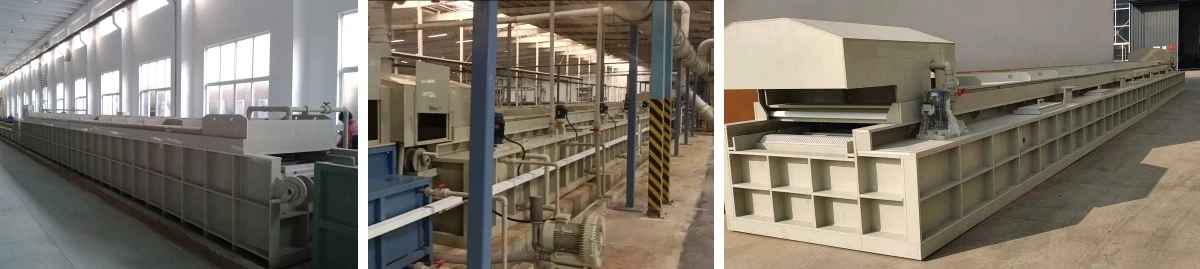
Name: Online Wire Water Rinsing Tank
Specification: The equipment is customized according to the type of wire products and the production line speed required by the user.
Overview:
The tank body is fabricated from acid resistant materials. To quickly and efficiently remove residual impurities from the wire surface, the tank uses a two stage overflow cleaning system with independent circulation and a counterflow water supply and drainage method. Each tray is equipped with a corrosion resistant vertical pump with a motor power of 0.55 kW to provide overflow pressure. During the overflow cleaning process, water enters the cleaning trays in the form of jets. The cleaning water can be recycled, reducing water consumption and wastewater discharge.
To prevent cleaning water from entering the next process, the tank outlet is equipped with interception stones and a back blowing air knife with a 5.5 kW blower to remove residual water from the wire surface. The tank is designed as a fully enclosed structure with an openable threading cover and a reserved air inlet for connection to a purification tower.
Water Rinsing Tank Application Parameters
|
Application Position |
Material |
Energy Source |
DV Value |
Applicable Wire Diameter Range |
|
Wire Pre-treatment Cleaning |
PP Sheet, Stainless Stee |
Electricity |
40–200 mm·m/min |
Φ0.8–Φ8.0 (mm) |
Electroplating Tank
Name: Electrogalvanizing Wire Equipment
Specification: The equipment is customized according to the type of wire products and the production line speed required by the user.
Overview:
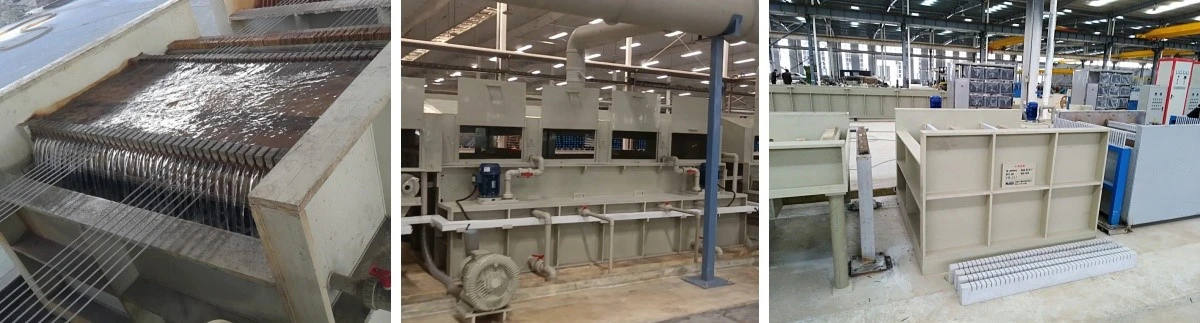
The tanks are fabricated from reinforced PP material by welding. The plating solution is prepared using zinc blocks and sulfuric acid. Zinc blocks are placed in the plating tank, and the solution concentration is adjusted by adding sulfuric acid and zinc sulfate in the solution preparation tank. The solution is then supplied to the plating tank through corrosion resistant pumps.
A circulation tray is installed in each tank, and the plating solution is supplied in a circulating manner. Each plating tank is equipped with a corrosion resistant lifting pump with a power of 2.2 kW to ensure uniform concentration of the plating solution. The electrical conduction system uses copper busbars for both positive and negative electrodes. The anode plates are made of lead, and the cathode uses copper conductive shafts to ensure uniform current density for each wire. Each electroplating tank is equipped with an adjustable silicon controlled rectifier power supply.
Two solution preparation tanks are provided. The plating solution can be periodically supplied from the preparation tanks to the plating tanks through corrosion resistant pumps and reused through circulation, ensuring stable solution performance. The rectifier is a high frequency adjustable power supply rated at 12 V and 7000 A, with a current density of 20 to 50 A per square decimeter, operating temperature of 20 to 40 degrees Celsius, and pH value of 2 to 4.5. The plating solution is filtered periodically according to production conditions and output requirements.
To prevent plating solution carryover into the next process, the outlet of the cleaning tank is equipped with a back blowing air knife and a turbine blower with a power of 3.7 kW to remove residual liquid from the wire surface.
Application Parameters
|
Application Position |
Material |
Energy Source |
DV Value |
Applicable Wire Diameter Range |
|
Electroplating Tank |
PP Plate |
Electricity |
80–200 mm·m/min |
Φ0.8–Φ8.0 (mm) |
Brightening Tank
Name: Electrogalvanizing Brightening Tank Equipment
Specification: The equipment is customized according to the type of wire products and the production line speed required by the user.
Overview:
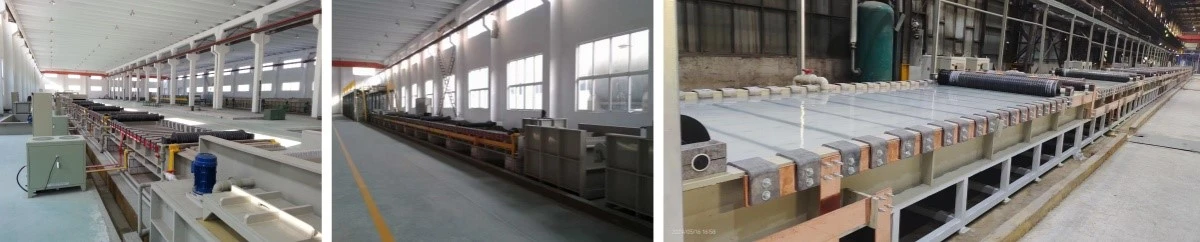
Each bright zinc plating tank is fabricated from reinforced PP material by welding. The plating solution is supplied from the storage tank to the plating tank through corrosion resistant pumps.
Each tank is equipped with a circulation tray, and the plating solution is supplied in a circulating manner. A corrosion resistant lifting pump with a power of 2.2 kW is installed for each tank to ensure uniform solution concentration. The electrical conduction system uses copper busbars for both positive and negative electrodes. The anode plates are made of lead, and the cathode uses copper conductive shafts to ensure uniform current density for each wire. Each electroplating tank is equipped with an adjustable silicon controlled rectifier power supply.
Application Parameters
|
Application Position |
Material |
Energy Source |
DV Value |
Applicable Wire Diameter Range |
|
Electroplating Tank |
PP Plate |
Electricity |
80–200 mm·m/min |
Φ0.8–Φ8.0 (mm) |
Activation Tank
Name: Electroplating Wire Activation Tank Equipment
Specification: The equipment is customized according to the type of wire products and the production line speed required by the user.
Overview:
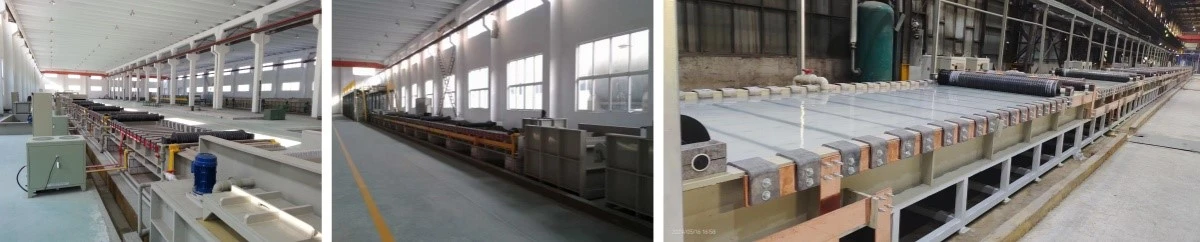
The tank is fabricated from reinforced PP plates by welding. The activation tank uses an activation solution to treat the wire surface and improve surface activity prior to electroplating. A corrosion resistant electric heater is installed to heat the activation solution, ensuring better plating performance.
To prevent liquid carryover into the next process, the outlet of the tank is equipped with a back blowing air knife and a turbine blower with a power of 3.7 kW to remove residual liquid from the wire surface. The system is also equipped with two corrosion resistant lifting pumps with a power of 0.55 kW each to provide overflow circulation.
Application Parameters
|
Application Position |
Material |
Energy Source |
DV Value |
Applicable Wire Diameter Range |
|
Electroplating Tank |
PP Plate |
Electricity |
80–200 mm·m/min |
Φ0.8–Φ8.0 (mm) |

Hot Water Rinsing Tank
Name: Online Wire Hot Water Rinsing Tank
Specification: The equipment is customized according to the type of wire products and the production line speed required by the user.
Overview:
The tank is fabricated from reinforced PP material by welding. It is designed for rapid and efficient removal of residual cleaning solution from the wire surface. The tank is equipped with two independent overflow washing trays, each operating with separate circulation.
The rinsing water is heated using corrosion-resistant electric heaters. During overflow rinsing, water is supplied to the trays in a jet flow pattern, allowing the water to be reused and reducing overall water consumption and wastewater discharge.
To prevent carryover into subsequent processes, the tank outlet is equipped with a back blowing air knife with a turbine blower rated at 3.7 kW to remove residual water from the wire surface. Water circulation is maintained by two corrosion-resistant lifting pumps, each rated at 0.55 kW. The tank is fully enclosed, with a removable threading cover and a provision for connecting an exhaust hood.
Application Parameters
|
Application Position |
Material |
Energy Source |
DV Value |
Applicable Wire Diameter Range |
|
Wire Pre-Treatment Cleaning |
PP Plate, Stainless Steel |
Electricity |
40–200 mm·m/min |
Φ0.8–Φ8.0 (mm) |

Passivation Tank
Name: Online Wire Passivation Rinsing Tank
Specification: The equipment is customized according to the type of wire products and the production line speed required by the user.
Overview:
The tank is fabricated from reinforced 304 stainless steel by welding. The solution circulates independently in an overflow manner, immersing the wire to ensure uniform surface protection and consistent color development. The passivation solution is heated using a steam heating system.
The tank outlet is equipped with a back blowing air knife, which requires a turbine blower, to remove residual liquid from the wire surface. A corrosion-resistant pump with a power of 0.55 kW is used to provide overflow circulation.
Application Parameters
|
Application Position |
Material |
Energy Source |
DV Value |
Applicable Wire Diameter Range |
|
Wire Pre-Treatment Cleaning |
PP Plate, Stainless Steel |
Electricity |
40–200 mm·m/min |
Φ0.8–Φ8.0 (mm) |

Drying Furnace
Name: Online Wire Drying Furnace For Electro galvanized Wire Equipment
Specification: The equipment is customized according to the type of wire products and the production line speed required by the user.
Overview:
The equipment is designed based on the wire diameter, DV value, and production output. The drying furnace is constructed with a welded Q235 steel frame, and the interior of the chamber is insulated with high temperature resistant aluminum silicate fiber. Hot air is circulated through ducting to heat the furnace chamber, and an exhaust fan is installed at the rear. The operating temperature is maintained between 150 and 180 degrees Celsius.
Application Parameters
|
Application Position |
Material |
Energy Source |
DV Value |
Applicable Wire Diameter Range |
|
Pre-galvanizing Wire Drying |
Metal + Insulation |
Electricity, Gas |
40–180 mm·m/min |
Φ0.8–Φ8.0 (mm) |
Wire Take-Up Unit
Name: Wire Take-Up Unit For Electro galvanized Wire Equipment
Specification: The equipment is tailored to the type of wire products and the production line speed specified by the user.
Overview:
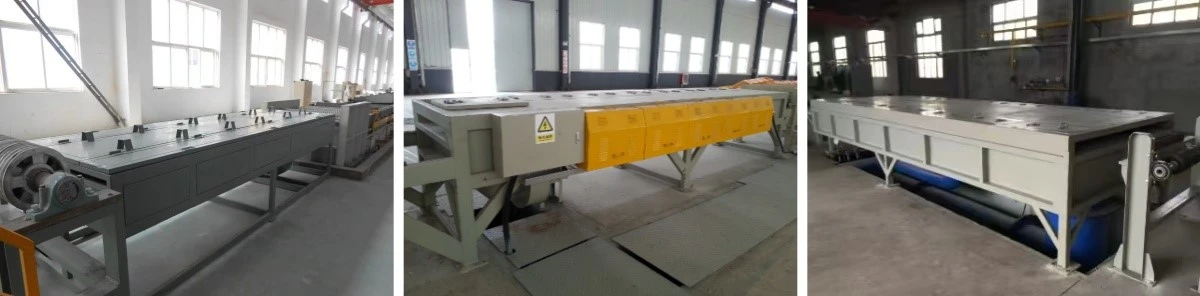
The design of the equipment takes into account wire diameter, DV value, and production output. It is suitable for winding wire after hot-dip galvanizing or electro-galvanizing. The take-up unit is selected based on the wire's post-galvanizing diameter, material, and intended use. The unit can handle wire reels weighing from 35 to 2000 kilograms.
Application Parameters
|
Winding Machine Type |
Material |
Energy Source |
Applicable Wire Diameter Range |
Reel Weight |
|
Horizontal Winding Machine |
Metal |
Electric Power |
Φ1.0–Φ6.0 mm |
0.2–0.8t |
|
Star Inverted Winding Machine |
Metal |
Electric Power |
Φ1.2–Φ8.0 mm |
0.8–2.0t |
|
Spool Winding Machine |
Metal |
Electric Power |
Φ0.6–Φ8.0 mm |
0.5–0.8t |
|
Elephant Nose Winding Machine |
Metal |
Electric Power |
Φ0.6–Φ1.6 mm |
20–50 kg |

Wire Bundling Machine
Name: Wire Bundling Machine
Specification: The equipment is configured according to the application and specifications of the wire products.
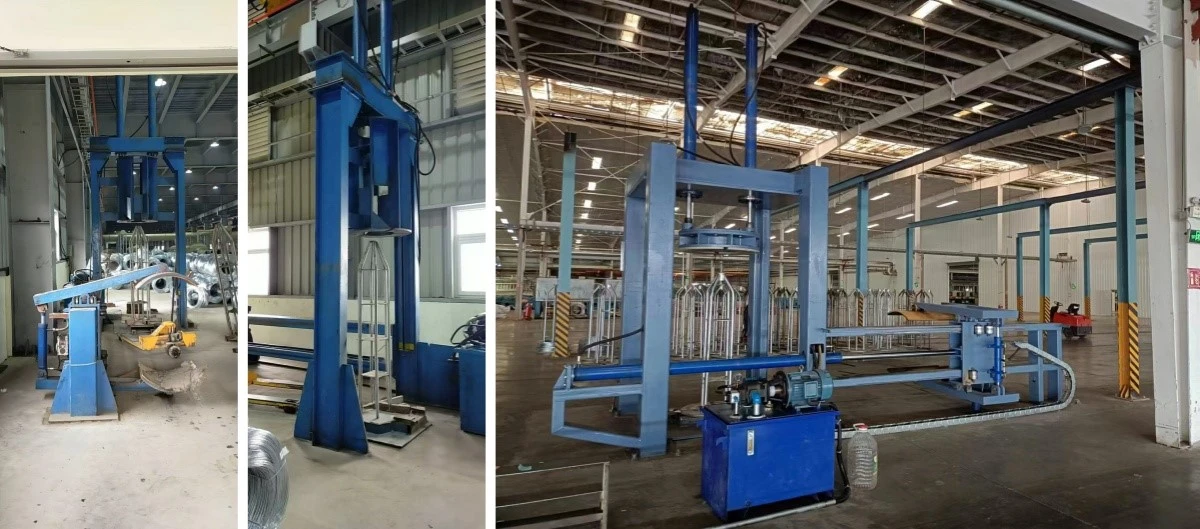
Overview:
This machine is used for bundling large wire reels after hot-dip or electro-galvanizing take-up. The hydraulic unit features a welded structural steel frame, providing a robust, all-metal construction. The top section is fitted with dual hydraulic cylinders, bolted to the lower pressing basket for convenient transport. A long-arm design allows the machine to handle reels weighing from 800 to 2000 kilograms.
Application Parameters
|
Application Position |
Material |
Energy Source |
Applicable Wire Diameter Range |
Coil Weight |
|
After Wire Winding and Strapping |
Metal |
Electric Power, Hydraulic |
Φ1.6–Φ8.0 mm |
0.8–2.0t |
Product Advantages
1.Exceptional Precision in Coating Thickness Management
The electrogalvanizing process provides inherently superior control over coating thickness compared to hot-dip methods. This equipment amplifies this advantage through a sophisticated multi-tank design featuring dedicated electroplating, brightening, and activation stages, each with independent power and circulation systems. The use of high-frequency, adjustable silicon-controlled rectifier power supplies (up to 7000A, 12V) for each tank enables precise current density regulation, ensuring atomic-level uniform zinc deposition. This permits the production of extremely thin, highly uniform coatings with tight tolerances, essential for applications where dimensional accuracy and minimal coating weight are paramount, such as in the automotive and electronics industries.
2.Superior Ductility and Formability for Post-Processing
Unlike hot-dip galvanizing, which creates brittle intermetallic layers due to the high-temperature reaction between molten zinc and steel, electrogalvanizing deposits a pure, soft zinc coating at ambient temperature. This process avoids any heat-induced changes to the base wire's microstructure. The resulting coating is exceptionally ductile and adheres perfectly without forming brittle compounds. This makes electrogalvanized wire the ideal choice for subsequent demanding forming operations such as deep drawing, crimping, bending, and threading, where the coating must flex and deform without cracking or flaking.
3.Integrated System for High-Gloss Aesthetic Finish
The equipment is designed to produce not just a protective coating, but a visually superior product. The dedicated brightening tank chemically levels the zinc coating at a microscopic level, eliminating minor surface imperfections and creating a smooth, brilliant, mirror-like finish that is highly reflective and visually appealing. The passivation tank further enhances this appearance by chemically treating the surface to stabilize its color, prevent tarnishing, and provide an additional layer of corrosion protection, making the wire suitable for decorative and high-visibility applications.
4.Closed-Loop Sustainability and Resource Efficiency
This equipment line is engineered with a strong emphasis on environmental responsibility and resource conservation. The electroplating process uses a closed-loop solution circulation system that significantly minimizes chemical waste and reduces raw material consumption. The water rinsing systems employ a two-stage overflow counterflow method to drastically reduce fresh water usage. The inclusion of specific activation and brightening tanks optimizes the plating process, increasing efficiency and reducing energy consumption per ton of finished wire. This commitment to sustainability directly translates to lower operational costs.
5.Modular Tank Design for Longevity and Easy Maintenance
The entire wet section is constructed from high-strength, reinforced PP material, chosen for its exceptional resistance to the process's acidic and alkaline solutions, ensuring a long, corrosion-free service life. The modular design means each tank-electroplating, brightening, activation, rinsing-is a self-contained unit with its own pumping, heating, and circulation systems. This architecture simplifies troubleshooting, allows for individual tank isolation and maintenance without shutting down the entire line, and facilitates easy future expansion or reconfiguration.
6.Enhanced Solution Management for Consistent Quality
The system includes dedicated solution preparation tanks and a circulation filtration system for the plating solution. This allows for precise control over the chemical composition of the plating solution, such as the concentration of zinc sulfate and sulfuric acid. The solution is filtered periodically to remove impurities and maintain its effectiveness. This proactive solution management ensures stable plating conditions, consistent quality over long production runs, and minimizes the risk of bath contamination and subsequent product defects.
FAQ
Q1: What is the main difference between the electroplating tank and the brightening tank in this line?
The electroplating tank is where the actual zinc metal is deposited onto the steel wire. A controlled electric current passes through the solution, causing zinc ions to be reduced and plated onto the wire. The brightening tank is a subsequent post-treatment stage. Its function is not to add zinc, but to chemically treat the freshly plated surface. The brightening solution contains additives that level the surface on a microscopic scale, smoothing out any micro-roughness and enhancing the reflectivity of the zinc layer, resulting in a brilliant, shiny appearance.
Q2: What is the function of the activation tank and why is it necessary?
The activation tank is a critical pre-plating stage. Just before entering the electroplating tank, the wire passes through the activation solution. This solution removes any thin oxide film that may have formed on the wire surface after the water rinse. It also creates a micro-roughened surface, which provides a superior active site for the zinc ions to deposit, resulting in better adhesion and a more uniform coating. Without this activation step, the zinc deposit might be porous, poorly adhered, or have an uneven appearance.
Q3: How does the passivation process contribute to the wire's corrosion resistance?
Passivation is a chemical post-treatment that creates a thin, stable, and protective oxide layer on the surface of the zinc coating. This layer, often termed a conversion coating, significantly increases the wire's resistance to white rust (zinc corrosion) and general atmospheric corrosion. It acts as an additional barrier to moisture and contaminants, and it also helps to seal the coating's surface, improving its overall integrity and longevity. It also enhances the adhesion of subsequent paint or other organic coatings.
Q4: How often does the plating solution need to be replaced or replenished?
The plating solution is not replaced entirely on a regular schedule; instead, it is continuously maintained. The system is designed with a solution preparation tank and a circulation system that continually monitors and adjusts the solution's chemical composition, adding zinc sulfate, sulfuric acid, and other additives as needed to maintain the correct concentrations. The solution is also periodically pumped through a filtration system to remove solid impurities and sludge. A full replacement is only required in the event of major contamination, which is rare with a well-maintained system.
Q5: Can the line electrogalvanize wire made of materials other than low-carbon steel?
Yes, the equipment is adaptable. While primarily designed for low-carbon steel wire, it can be configured to process other conductive materials, such as certain stainless steel grades, copper wire, or aluminum wire. However, this requires adjustments to the chemical composition of the plating solution, the parameters of the rectifier (current density and voltage), and potentially the pre-treatment sequence to accommodate the different surface chemistries. Such modifications are possible and can be tailored to your specific material requirements.
Hot Tags: electro galvanized wire equipment, China electro galvanized wire equipment manufacturers, suppliers, factory


