


Wire Pay Off Spooling Unit
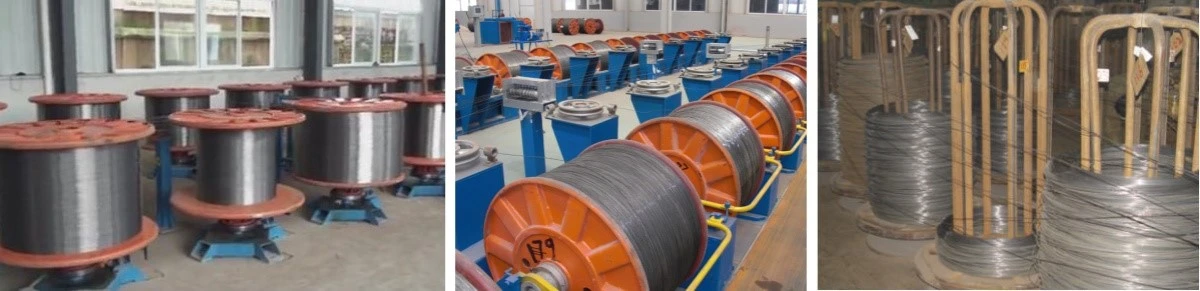
Passive Wire Pay-off
Name: Passive I-beam Wire Pay-off Stand
Overview: This equipment is suitable for wire pay-off in electro-galvanizing and hot-dip galvanizing production lines. The equipment consists of a rotating base and a pay-off stand. The rotating base is equipped with a tensioning device to control the pay-off tension. During production, the pay-off stand can be freely replaced.
Active Wire Pay-off
Name: Active I-beam Wire Pay-off Equipment
Overview:The equipment adopts an accumulator-type pay-off unit to ensure stable wire tension without loosening. The wire accumulation time is no less than 3 minutes, allowing the I-beam spool to be replaced without stopping the production line. Spool replacement is simple and convenient to operate. The electrical system is integrated with the take-up machine electrical system and installed in an independent control cabinet. The pay-off and take-up units are interlocked for control, with automatic tension tracking and adjustment.
Wire Pay-off Specifications
Customized according to the type of wire products and the operating speed of the production line required by the user.
Application Parameters for Wire Pay-off
|
Application Position |
Material |
Applicable Spool Diameter Range |
|
Wire Pay-off |
Metal |
Φ800~Φ1100 (mm) |
Heat Treatment Furnace
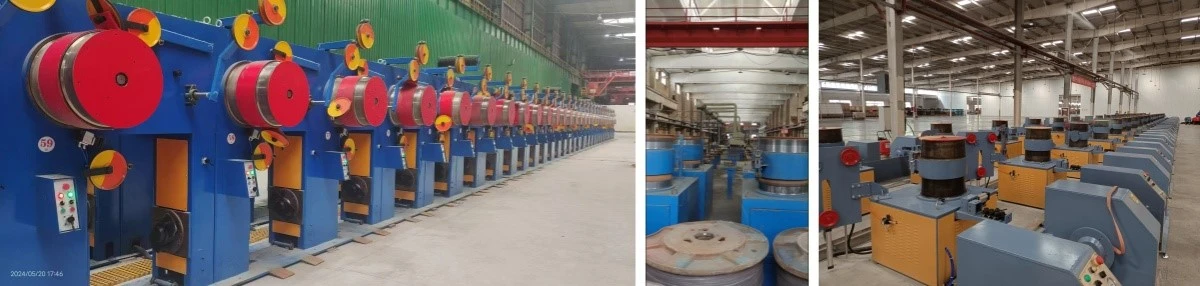
Name: Online Wire Heat Treatment Furnace For Hot dip Galvanized Low carbon Steel Wire Equipment
Specification: Customized according to the type of wire products and the production line speed required by the user.
Overview:This furnace is suitable for the online heat treatment process of low-carbon wire. To ensure stable mechanical properties of the steel wire, the furnace adopts a box-type structure with reinforced insulation layers on the furnace walls and roof, ensuring uniform and stable temperature control in the heating chamber. The heat treatment furnace is equipped with multiple heating and temperature measuring points and adopts a PID automatic temperature control system. The process temperature of the heat treatment furnace is controlled within the range of 650–850 °C.
Application Parameters
|
Application |
Construction Material |
Energy Source |
DV Value |
Wire Diameter Range |
|
Wire Heat Treatment |
Metal + Insulation |
Electricity / Natural Gas / Coal Gas |
40–200 mm·m/min |
Φ0.8–Φ8.0 mm |

Temperature-Controlled Cleaning Tank
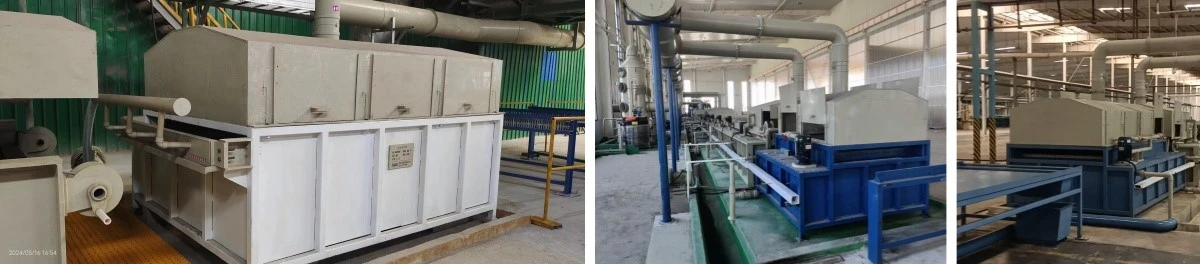
Name: Temperature-Controlled Cleaning Tank For Hot dip Galvanized Low carbon Steel Wire Equipment
Specification: Customized according to the type of wire products and the production line speed required by the user.
Overview:
The tank body is fabricated by welding 304 stainless steel. To quickly and efficiently remove residual impurities from the steel wire surface, the tank adopts a two-stage overflow cleaning system with independent circulation and a counterflow water supply and drainage design.
The system is equipped with two overflow trays, and each tray is fitted with a corrosion-resistant vertical pump (motor power 0.55 kW) to provide the overflow circulation. During the overflow cleaning process, water enters the cleaning trays in the form of jet spraying, allowing the cleaning water to be recycled, thereby reducing water consumption and minimizing wastewater discharge.
To prevent cleaning water from entering the next process, the outlet of the cleaning tank is equipped with a water interception stone and an air knife (blower power 5.5 kW) to remove residual cleaning water from the wire surface.
The tank is designed with a fully enclosed structure with an openable threading cover, and an air suction port is reserved for connection to a purification tower.
Application Parameters
|
Application Position |
Material |
Energy Source |
DV Value |
Applicable Wire Diameter Range |
|
Electroplating Tank |
Stainless Steel |
Electricity |
20–80 mm·m/min |
Φ0.8–Φ8.0 (mm) |
Pre-treatment Equipment
Ultrasonic Cleaning Tank
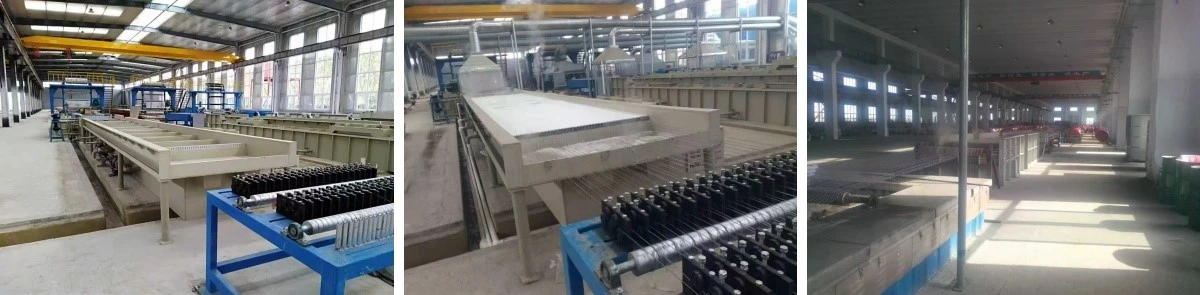
Name: Online Wire Ultrasonic Cleaning Tank
Specification: Customized according to the type of wire products and the production line speed required by the user.
Overview:
The ultrasonic cleaning tank can replace the functions of both alkaline and acid cleaning tanks, performing degreasing and rust removal simultaneously, thereby shortening the production line length.
It uses a fully enclosed overflow ultrasonic cleaning system, in which the steel wire is cleaned in a completely sealed space using an environmentally friendly ultrasonic cleaning solution (mild phosphoric acid, H₃PO₄), suitable for steel wire cleaning and compatible with hot-dip galvanizing line speeds. Ultrasonic cleaning is energy-saving and environmentally friendly, producing no waste acid.
The ultrasonic cleaning tank is constructed from high-strength PP material and equipped with a corrosion-resistant circulation pump. The lower liquid reservoir is divided into two independent sections, A and B. While the liquid in Section A is circulating, Section B can be filtered, cleaned, and reused, enabling continuous cleaning of the solution without stopping the line.
A sealed cover is installed on top of the cleaning tank to prevent water and vapor from escaping. During cleaning, the steel wire is fully submerged in the cleaning solution. The tank employs a two-stage liquid reservoir system, where each stage operates independently. An external cleaning solution circulation and filtration system allows the cleaning solution to be reused, reducing consumable usage and operating costs.
Hydrochloric Acid Cleaning Tank
Name: Online Wire Hydrochloric Acid Cleaning Tank
Specification: Customized according to the type of wire products and the production line speed required by the user.
Overview:
The integrated acid cleaning tank is constructed from PP material, and the steel wire moves in a straight line during the cleaning process. The tank uses an overflow design, with the water curtains equipped with two corrosion-resistant pumps (4.0 kW). The acid cleaning tank itself is equipped with six acid-resistant pumps (0.55 kW) to provide overflow circulation for the acid solution.
The tank inlet and outlet are sealed with two water curtains each, and the sides use groove seals to prevent acid mist from escaping. To ensure rapid removal of oxides from the steel wire surface, the process is designed to meet the fast cleaning requirements of the galvanizing line.
The tank solution is circulated using the acid-resistant pumps, enabling the steel wire to achieve the required pre-galvanizing surface cleanliness under hydrochloric acid flushing. To reduce acid consumption and prevent acid carryover into the next process, the tank outlet is equipped with water interception stones and an air blow wipe system to remove residual acid from the wire surface.
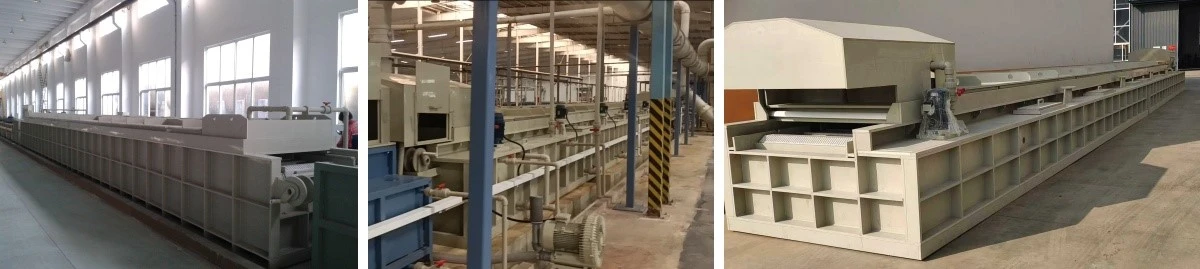
Rinse Tank
Name: Online Wire Water Cleaning Tank
Specification: Customized according to the type of wire products and the production line speed required by the user.
Overview:
The tank body is fabricated from acid-resistant materials. To quickly and efficiently remove residual impurities from the steel wire surface, the tank uses a two-stage overflow cleaning system with independent circulation and a counterflow water supply and drainage design.
Each tray is equipped with a corrosion-resistant vertical pump (motor power 0.55 kW) to provide overflow circulation. During the cleaning process, water enters the cleaning trays as spray jets, and the cleaning water can be recycled, reducing water consumption and minimizing wastewater discharge.
To prevent cleaning water from entering the next process, the tank outlet is equipped with water interception stones and an air knife (blower power 5.5 kW) to remove residual water from the wire surface.
The tank is designed as a fully enclosed system with an openable threading cover, and an air suction port is reserved for connection to a purification tower.
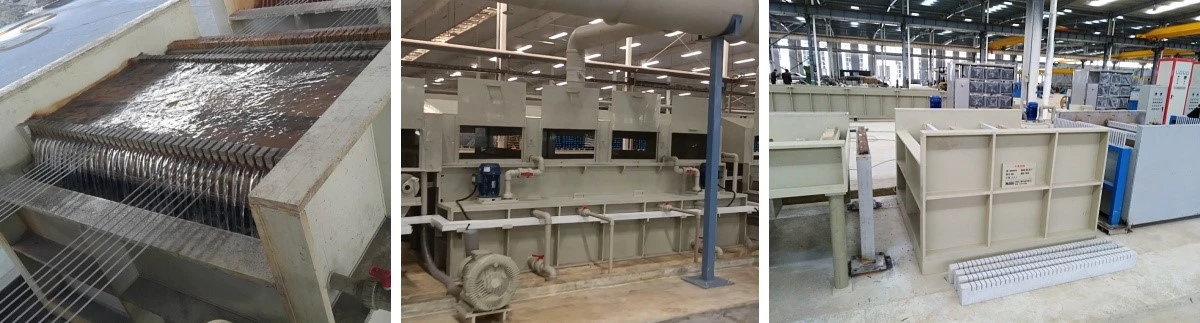
Strike (Pre-dip) Tank
Name: Online Wire Strike Solvent Washing Tank
Specification: Customized according to the type of wire products and the production line speed required by the user.
Overview:
The enclosed strike solvent washing tank is fabricated from reinforced PP material plates. During operation, a water-based ammonium chloride solution is applied to the steel wire surface to prevent secondary oxidation and improve the adhesion between the steel wire and the zinc coating.
The tank uses an overflow circulation system for continuous cleaning. A sealed cover is installed on top of the tank, and the steel wire exit is equipped with a ceramic air knife to prevent alkaline solution carryover, avoiding contamination of subsequent process steps.
Cleaning Tank Application Parameters
|
Application Position |
Material |
Energy Source |
DV Value |
Applicable Wire Diameter Range |
|
Wire Pre-treatment Cleaning |
PP Sheet, Stainless Stee |
Electricity |
40–200 mm·m/min |
Φ0.8–Φ8.0 (mm) |
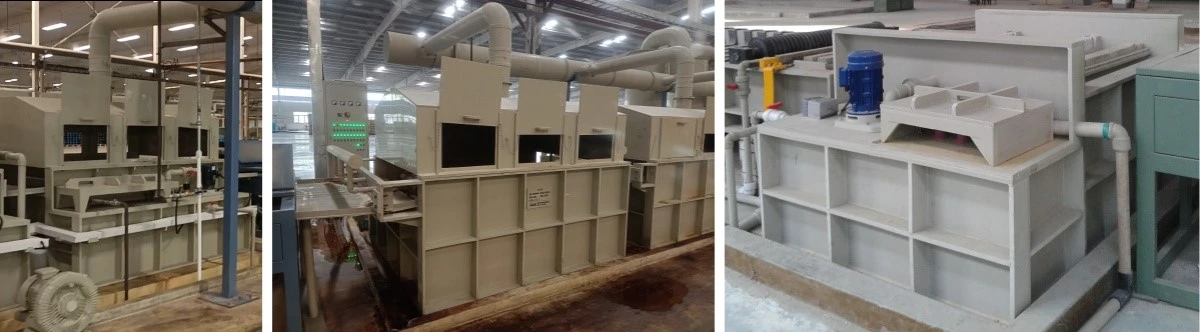
Drying Furnace
Name: Online Wire Drying Equipment
Specification: Customized according to the type of wire products and the production line speed required by the user.
Overview:
The equipment is designed according to the wire diameter, DV value, and wire production output. The drying furnace is constructed with a Q235 steel welded frame, and the interior of the chamber is insulated with high-temperature aluminum silicate fiber material.
Heating is achieved through hot air circulation ducts, and an induced draft fan is installed at the end of the furnace. The operating temperature range of the furnace is 150–180°C.
Application Parameters
|
Application Position |
Material |
Energy Source |
DV Value |
Applicable Wire Diameter Range |
|
Pre-galvanizing Wire Drying |
Metal + Insulation |
Electricity, Gas |
40–180 mm·m/min |
Φ0.8–Φ8.0 (mm) |
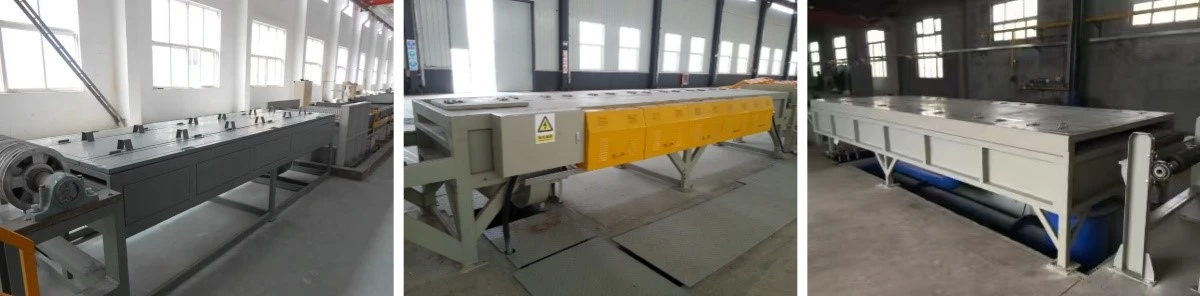
Zinc Bath
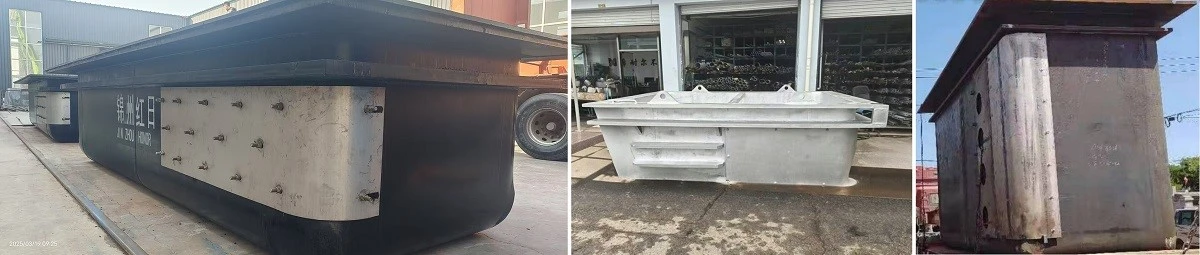
Metal Zinc Bath
Name: Metal Hot-Dip Zinc Bath
Specification: Customized according to the user's energy requirements and line speed.
Overview:
The equipment is designed based on the user's energy requirements, wire diameter, DV value, and wire production output, with a zinc capacity of 35–180 tons. The bath is made of XG08 metal or stainless steel and works in coordination with the furnace.
Heating is external, and the energy source can be electricity or natural gas. The zinc bath temperature is controlled using corrosion-resistant thermocouples, which are in direct contact with the molten zinc to ensure stable and accurate temperature control. The equipment has a service life of 5–8 years or more.
Metal Zinc Bath Application Parameters
|
Application Position |
Material |
Energy Source |
DV Value |
Applicable Wire Diameter Range |
|
Hot-Dip Galvanizing Zinc Bath |
XG08 Metal + Stainless Steel |
Electricity, Gas |
40–200 mm·m/min |
Φ0.8–Φ8.0 (mm) |
Ceramic Zinc Bath
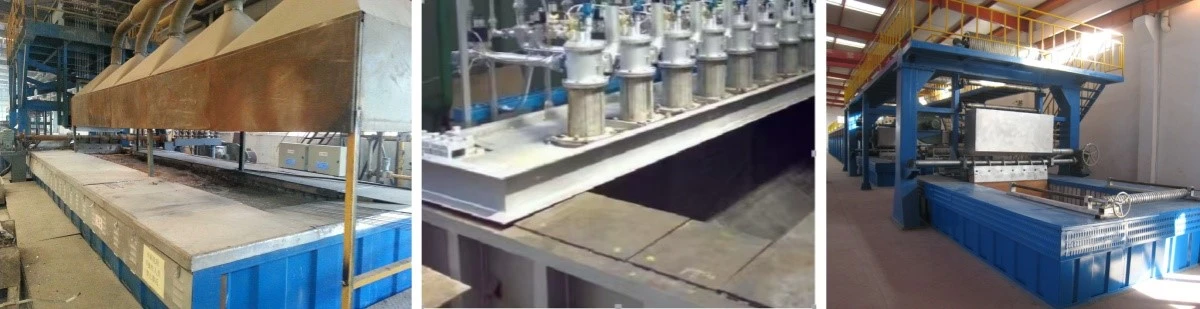
Name: Internally Heated Ceramic Zinc Bath
Specification: Customized according to the type of wire products and production line speed.
Overview:
The equipment is designed based on the wire diameter, DV value, and wire production output, with a zinc capacity of 35–180 tons. The bath features a steel shell, ceramic liner, and internal heating system, with the heating elements installed along the inner wall of the zinc bath to ensure uniform temperature in the working zone.
The zinc bath temperature is controlled using corrosion-resistant thermocouples that are in direct contact with the molten zinc, ensuring stable and accurate temperature control. The expected service life of the bath is over 10 years.
Ceramic Zinc Bath Application Parameters
|
Application Position |
Material |
Energy Source |
DV Value |
Applicable Wire Diameter Range |
|
Hot-Dip Galvanizing Zinc Bath |
Steel Structure + Ceramic |
Electricity, Gas |
40–200 mm·m/min |
Φ0.8–Φ8.0 (mm) |
Gantry Frame
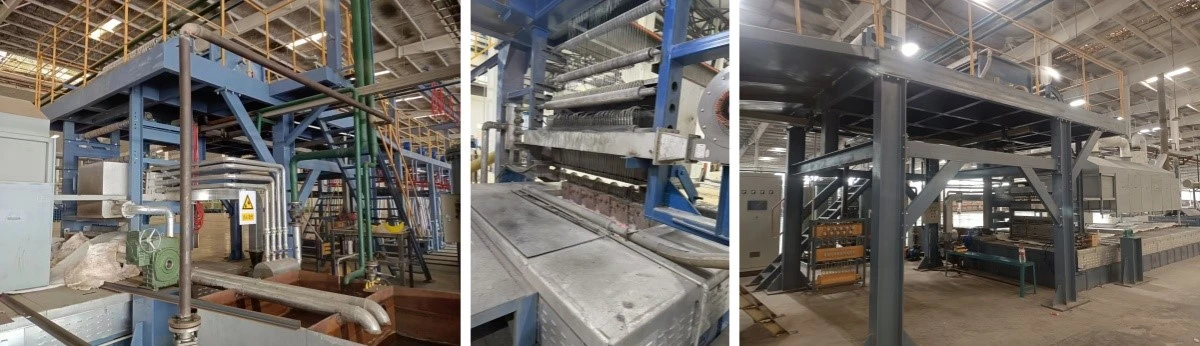
Name: Zinc Bath Gantry Frame (Vertical Steel Frame)
Specification: Customized according to the type of wire products and production line speed.
Overview:
The equipment is designed based on the wire diameter, DV value, and wire production output. A vertical steel frame is installed above the zinc bath to ensure stable operation of the equipment, preventing vibration and allowing smooth hot-dip galvanizing of the wire.
The vertical steel frame is constructed from structural steel and is equipped with wire support shafts, air and water cooling devices, guide rollers, wire directing shafts, and wiping frames as auxiliary equipment.
Application Parameters
|
Application Position |
Material |
Energy Source |
DV Value |
Applicable Wire Diameter Range |
|
Hot-Dip Galvanizing Zinc Bath |
Steel Structure |
- |
40–200 mm·m/min |
Φ0.8–Φ8.0 (mm) |
Ceramic Pressure Roller
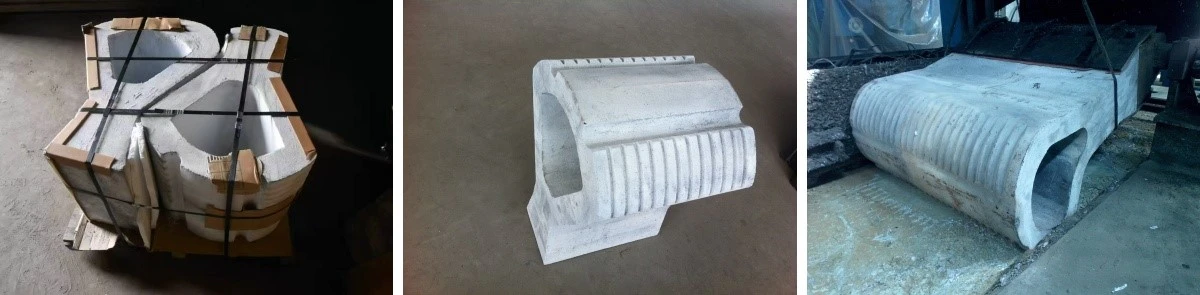
Name: Synthetic Silicon Nitride Ceramic Pressure Roller
Specification: Customized according to the type of wire products.
Overview:
The pressure rollers are manufactured from sintered synthetic silicon nitride ceramic. Two independent structural designs are used for high-zinc and standard-zinc wires, but the installation positions are the same, ensuring consistent zinc coating weight and reducing production costs.
The silicon nitride ceramic pressure rollers have high strength, excellent wear resistance, and corrosion resistance to molten zinc. The roller assembly adopts a two-stage gearbox flip structure, allowing the wire exit angle to be freely adjusted. The expected service life is ≥5 years.
Application Parameters
|
Application Position |
Material |
Energy Source |
DV Value |
Applicable Wire Diameter Range |
|
Hot-Dip Galvanizing Zinc Bath |
Silicon Nitride |
- |
8–60 mm·m/min |
Φ0.8–Φ8.0 (mm) |
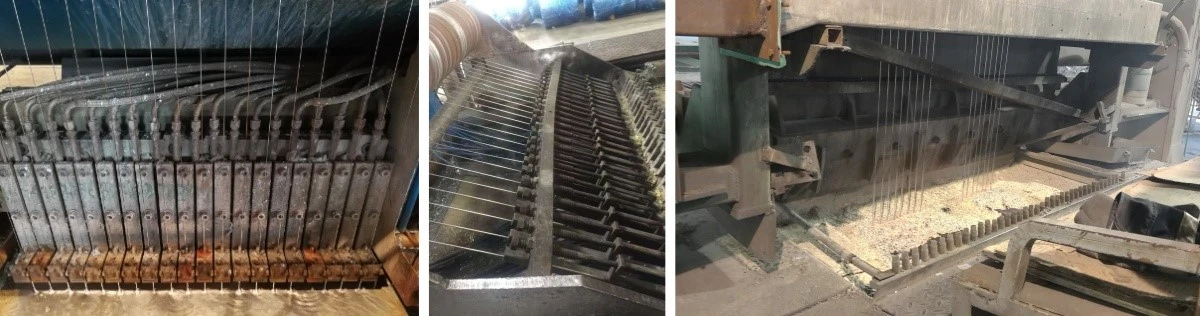
Wiping System
Name: Wire Hot-Dip Galvanizing Wiping System
Specification: Customized according to the wire diameter, DV value, and wire production output.
Overview:
The wire wiping method is selected based on the required zinc coating thickness, DV value, and wire production output. Available wiping technologies include:
Fiber Pressure Block Wiping
Nitrogen Air Knife Wiping
Electromagnetic Wiping
Traditional Charcoal Wiping
These systems control the zinc coating thickness on the wire surface, with an adjustable range of 50–460 g/m².
Application Parameters
|
Wiping Method |
Number of Steel Wires |
DV Value |
Applicable Wire Diameter Range |
|
Fiber Pressure Block Wiping |
36-42 wires |
60-90 mm·m/min |
Φ0.8-Φ8.0 mm |
|
Nitrogen Protection Wiping |
32-42 wires |
60-120 mm·m/min |
Φ0.8-Φ8.0 mm |
|
Nitrogen Air Knife Wiping |
12-22 wires |
80-200 mm·m/min |
Φ0.8-Φ8.0 mm |
|
Electromagnetic + Nitrogen Wiping |
12-22 wires |
80-200 mm·m/min |
Φ0.8-Φ8.0 mm |
|
Charcoal Wiping |
22-60 wires |
40-50 mm·m/min |
Φ0.8-Φ8.0 mm |
Zinc Coating Thickness Control System
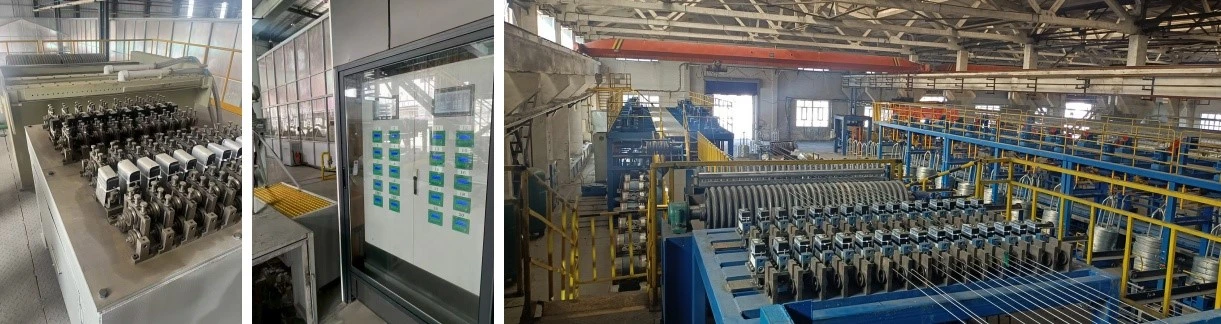
Name: Online Zinc Coating Thickness Measurement System for Wire Hot-Dip Galvanizing
Specification: Customized according to the type of wire products and production line speed.
Overview:
This system is suitable for nitrogen wiping systems and electromagnetic wiping systems in wire hot-dip galvanizing lines.
The zinc coating is monitored online using a comparison-based detection and control method. During production, the desired zinc coating thickness is set on the HMI, typically with a tolerance of ±20 g/m².
The measurement device transmits real-time data to the PLC, which adjusts the solenoid valves in the nitrogen line as needed. By controlling the flow and pressure of the nitrogen air knives, the system ensures the zinc coating thickness is maintained accurately, making operation and adjustment simpler and more convenient.
Application Parameters
|
Application Position |
Material |
Energy Source |
DV Value |
Applicable Wire Diameter Range |
|
After Wire Galvanizing |
Metal |
Electric Power |
100-200 mm·m/min |
Φ1.2-Φ8.0 mm |
Wire Take-Up Unit
Name: Wire Take-Up Unit For Hot dip Galvanized Low carbon Steel Wire Equipment
Specification: Customized according to the type of wire products and production line speed.
Overview:
The equipment is designed based on the wire diameter, DV value, and wire production output. It is suitable for wire take-up after hot-dip galvanizing or electro-galvanizing.
The take-up unit is selected according to the diameter, material, and intended use of the coated wire. The take-up weight range is 35–2000 kg.
Application Parameters
|
Winding Machine Type |
Material |
Energy Source |
Applicable Wire Diameter Range |
Reel Weight |
|
Horizontal Winding Machine |
Metal |
Electric Power |
Φ1.0–Φ6.0 mm |
0.2–0.8t |
|
Star Inverted Winding Machine |
Metal |
Electric Power |
Φ1.2–Φ8.0 mm |
0.8–2.0t |
|
Spool Winding Machine |
Metal |
Electric Power |
Φ0.6–Φ8.0 mm |
0.5–0.8t |
|
Elephant Nose Winding Machine |
Metal |
Electric Power |
Φ0.6–Φ1.6 mm |
20–50 kg |

Bundling Machine
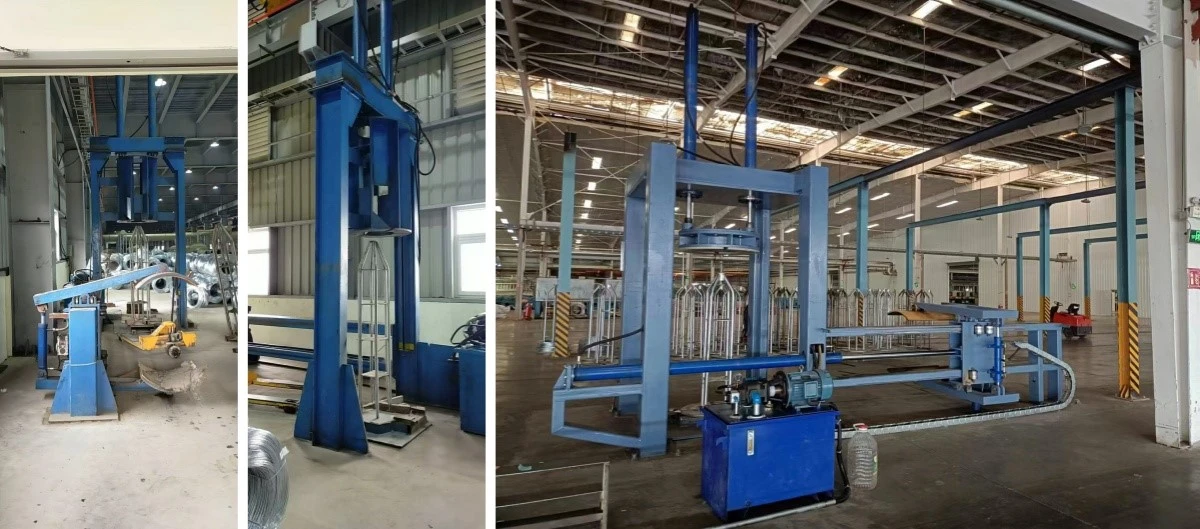
Name: Wire Bundling Machine For Hot dip Galvanized Low carbon Steel Wire Equipment
Specification: Customized according to the wire product's intended use.
Overview:
The equipment is suitable for bundling large coils of wire after hot-dip galvanizing or electro-galvanizing and subsequent take-up.
The main frame of the hydraulic bundling machine is made of welded structural steel, forming a fully metal construction. The top section uses a dual hydraulic cylinder design, with cylinders screwed to the lower pressure basket for convenient transport.
A long-arm structure is used to accommodate take-up coil weights of 800–2000 kg.
Application Parameters
|
Application Position |
Material |
Energy Source |
Applicable Wire Diameter Range |
Coil Weight |
|
After Wire Winding and Strapping |
Metal |
Electric Power, Hydraulic |
Φ1.6–Φ8.0 mm |
0.8–2.0t |
Product Advantages
1.Seamless Integration of Online Heat Treatment for Low Carbon Steel Wire
This system uniquely integrates a dedicated online heat treatment furnace directly into the galvanizing line, specifically optimized to meet the heat treatment requirements of low carbon steel wire.
By combining heat treatment and galvanizing within a single continuous production line, the system eliminates the need for separate and costly off-line annealing processes. This integrated design not only reduces factory space requirements but also minimizes material handling, energy consumption, and production losses.
The furnace features a robust box-type structure with reinforced thermal insulation on both the walls and top section, ensuring excellent heat retention, stable temperature control, and efficient energy utilization.
2.Superior Surface Preparation with 304 Stainless Steel Cleaning Tanks
The temperature-controlled cleaning tanks are manufactured from high-grade 304 stainless steel, providing significant advantages over alternative materials such as PP. The stainless-steel construction improves cleaning performance while delivering exceptional mechanical strength and long-term durability.
The tanks are equipped with a two-stage overflow system featuring independent circulation and counter-current water supply and discharge design. This ensures thorough rinsing of the steel wire and effective removal of residual chemicals from the wire surface.
The 304 stainless steel structure also provides excellent resistance to impact, wear, and continuous operating conditions, ensuring extended service life with minimal maintenance requirements.
3.Environmental Sustainability Through Water Recovery and Recycling
The production line is designed with sustainability as a key consideration. The water cleaning tanks adopt a two-stage overflow rinsing system with independent circulation and counter-current water supply and discharge methods.
During the overflow cleaning process, water is introduced into the cleaning tray through a spray distribution system, maximizing contact with the steel wire surface and improving rinsing efficiency.
The cleaning water can be recovered and recycled, significantly reducing overall water consumption and minimizing wastewater discharge.
To prevent contamination and chemical carryover between process stages, each cleaning tank outlet is equipped with a water barrier system and a reverse-blow air knife powered by a 5.5 kW fan, effectively removing residual cleaning water from the wire surface before entering the next process.
4.Flexible Wiping Options for Low Carbon Steel Wire Applications
The wiping system offers multiple technologies to accommodate different product requirements and coating specifications.
For applications requiring extremely smooth surfaces and precise coating control, nitrogen air knives or electromagnetic wiping systems provide ideal non-contact solutions that protect the surface quality of low carbon steel wire while achieving accurate zinc coating control.
For general-purpose galvanizing applications, the fiber pad wiping method provides a reliable and cost-effective solution.
This flexible configuration enables manufacturers to precisely control zinc coating weight within a range of 50–460 g/m², ensuring that galvanized wire meets the specific performance requirements of various end-use applications.
5.Fully Enclosed Design for Enhanced Operator Safety and Emission Control
The entire pre-treatment and galvanizing sections are designed as a fully enclosed system.
The pre-treatment line is completely sealed to contain chemical fumes, which are then collected and directed to an acid mist scrubber system for treatment. This protects the working environment while ensuring compliance with strict emission regulations.
A sealed zinc fume collection hood installed above the zinc pot further controls zinc vapor emissions during the galvanizing process.
This comprehensive environmental management approach demonstrates a strong commitment to sustainable manufacturing. Combined with automated operation and interlock control systems, the equipment minimizes direct operator exposure to hazardous materials and significantly improves workplace safety.
6.Cost-Effective Operation Through Improved Energy Efficiency
The integration of the heat treatment furnace with the rest of the production line allows thermal energy from the wire to be effectively retained, reducing the additional energy required for subsequent drying processes.
The water recovery system and cascade overflow cleaning design minimize water consumption and wastewater generation. In addition, both the drying furnace and zinc pot are equipped with high-performance insulation systems to reduce heat loss and improve energy utilization.
Together, these energy-saving features reduce overall operating costs by lowering energy consumption and chemical usage, making the system a highly cost-effective solution for large-scale low carbon steel wire galvanizing operations.
FAQ
Q1: How does the integrated heat treatment furnace affect the overall line speed and productivity of the galvanizing line?
The integrated heat treatment furnace is designed to match the production capacity of the galvanizing line without creating any bottleneck.
As the wire passes through the furnace for annealing, it moves continuously at the same speed as the rest of the production process. The furnace length and heating zones are carefully engineered to ensure that the wire reaches the required treatment temperature within the available processing time while maintaining the target line speed.
This seamless integration makes heat treatment a "time-neutral" process, meaning it does not add additional cycle time or reduce overall productivity. In fact, it improves production efficiency by eliminating the need for separate off-line annealing operations.
Q2: What are the specific advantages of using 304 stainless steel cleaning tanks compared with alternative materials such as PP?
Although both materials offer corrosion resistance, 304 stainless steel provides significant advantages for temperature-controlled cleaning tanks.
Its higher thermal conductivity enables faster and more uniform heating of the cleaning solution, which is essential for achieving optimal cleaning performance.
Compared with PP tanks, 304 stainless steel also offers superior mechanical strength and better resistance to impact and wear. This makes it more suitable for demanding industrial environments where the tank is subjected to continuous wire loading, mechanical stress, and fluid circulation.
As a result, 304 stainless steel tanks provide a longer service life, improved structural reliability, and reduced risk of equipment failure.
Q3: Can this production line process low carbon steel wire with pre-existing surface coatings, such as drawing compounds?
Yes. The production line is specifically designed to handle such conditions.
The pre-treatment section provides sufficient cleaning capability to remove most industrial drawing compounds, lubricants, and light surface contaminants.
For heavier or more persistent coatings, an optional ultrasonic cleaning module is highly recommended. The ultrasonic cleaning tank uses a mild phosphoric acid solution, which effectively breaks down and removes stubborn organic residues and light rust in a single process step.
This ensures that the wire surface is completely clean and properly prepared before entering the zinc bath.
Q4: What is the typical pay-off tension, and how is it controlled to prevent wire breakage?
The exact pay-off tension depends on the wire diameter and the specific mechanical properties of the low carbon steel being processed.
The system utilizes an active pay-off unit equipped with a wire accumulator and automatic tension control system. Tension sensors continuously monitor wire slack and automatically adjust the pay-off speed to synchronize with the production line speed.
This prevents excessive tension that could cause wire breakage while also avoiding insufficient tension that may result in wire loosening or tangling.
The system is optimized for the soft and ductile characteristics of low carbon steel wire, maintaining stable and low operating tension to ensure smooth, continuous, and reliable production.
Q5: What is the function of the flux solution cleaning tank, and why is it important?
The flux solution tank applies a controlled layer of ammonium chloride-based flux solution onto the wire surface immediately before the wire enters the zinc bath.
This process serves two critical functions:
1.Prevents re-oxidation: The flux coating protects the clean steel surface from oxidation during the transfer process between pre-treatment and galvanizing.
2.Improves wetting and adhesion: The flux promotes better interaction between the steel surface and molten zinc, ensuring more uniform coating formation and stronger metallurgical bonding.
This step is essential for producing high-quality galvanized wire with excellent surface appearance, strong coating adhesion, and minimal defects.
Hot Tags: hot dip galvanized low carbon steel wire equipment, China hot dip galvanized low carbon steel wire equipment manufacturers, suppliers, factory


