

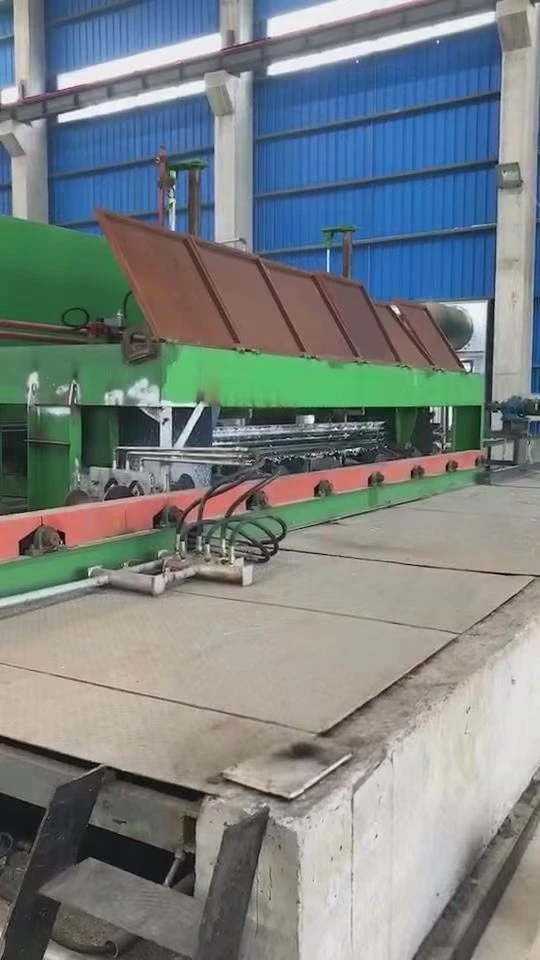
Rail Transfer Cart
Name: Rail Transfer Cart For Thin Coating Blown Hot dip Galvanizing Equipment
Specification: The equipment is customized according to the user's product type and load capacity requirements.
Overview:
This transfer cart is designed for handling structural components, power fittings, steel pipes, profiles, and similar workpieces in hot-dip galvanizing processes, with a load capacity ranging from 1 to 16 tons.
The cart can be powered via wired or wireless power supply systems. Control options include a fixed control panel or remote control operation.
The cart body is fabricated from welded steel structure and coated with anti-corrosion resin paint. The drive system consists of an electric motor and a reduction gearbox, ensuring stable and reliable operation.
Application Parameters
|
Application Position |
Material |
Energy Source |
Application Scope |
|
Transfer of Black and Finished Workpieces |
Metal |
Electricity |
Transport of untreated workpieces into the pickling room and transfer of finished (galvanized) workpieces |
Loading and Unloading Rack
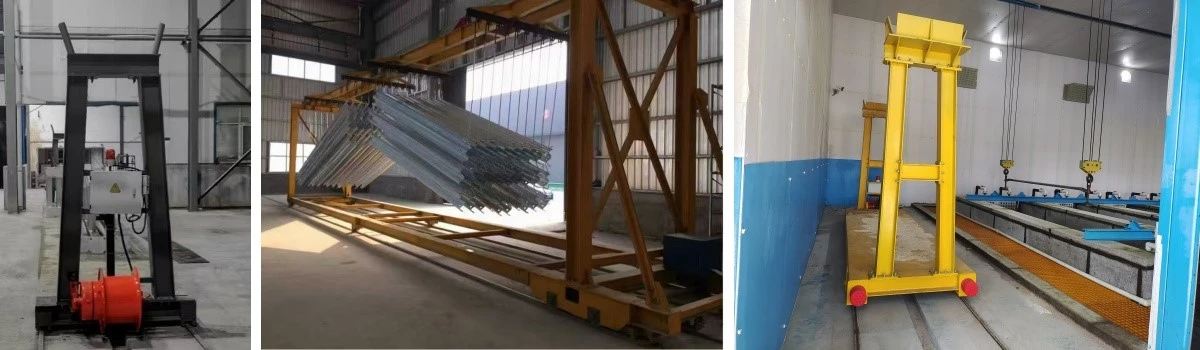
Name: Loading and Unloading Rack
Specification: The equipment is customized according to the maximum workpiece length, single-batch weight, and product type required by the user.
Overview:
This system is designed for loading and unloading operations of structural components, power fittings, steel pipes, profiles, and similar workpieces in hot-dip galvanizing processes.
Before galvanizing, workpieces are suspended on lifting frames for preparation. After galvanizing, the finished workpieces are placed on the unloading rack for removal.
The loading and unloading rack is equipped with an integrated lifting mechanism that can move up and down, facilitating efficient hanging and removal of workpieces.
Application Parameters
|
Application Position |
Material |
Energy Source |
Application Scope |
|
Workpiece Loading and Unloading |
Metal |
Electricity |
Loading of untreated workpieces and unloading of galvanized workpieces |
Pickling Room
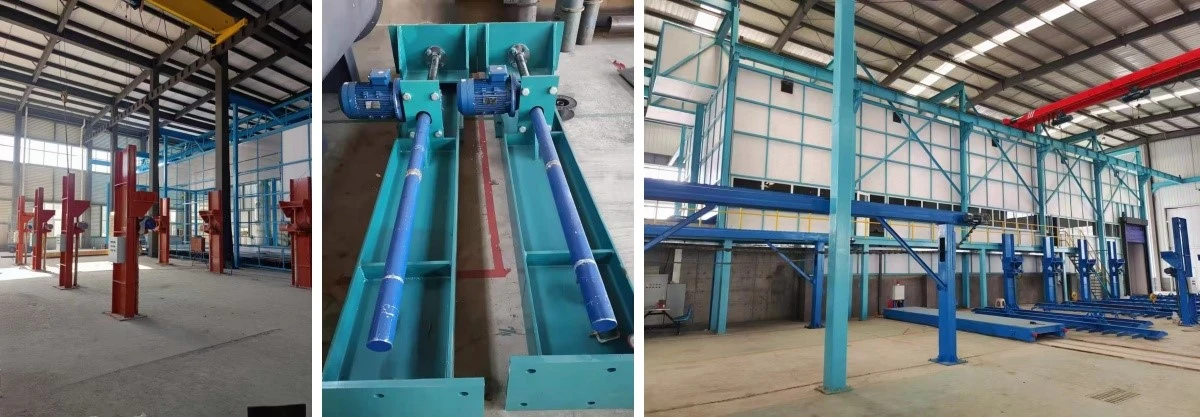
Name: Enclosed Pickling Room For Thin Coating Blown Hot dip Galvanizing Equipment
Specification: The equipment is customized according to the maximum workpiece length and lifting height required by the user.
Overview:
This system is designed for the pre-treatment of structural components, power fittings, steel pipes, profiles, and similar workpieces in hot-dip galvanizing processes.
All pre-treatment operations, including pickling, rinsing, and fluxing, are carried out בתוך a fully enclosed chamber. This effectively isolates the pre-treatment tanks from the main workshop and minimizes the leakage of harmful gases.
The enclosure is constructed with a steel structure, coated with polyurea or anti-corrosion resin paint, and lined internally with FRP or UPVC panels for enhanced corrosion resistance.
An acid fume neutralization and filtration tower is installed outside the enclosure to absorb and neutralize acid gases before discharge.
Application Parameters
|
Application Position |
Material |
Energy Source |
Application Scope |
|
Exhaust Protection of Pre-treatment Tanks |
Steel + UPVC |
- |
Collection and controlled discharge of exhaust gases generated from pre-treatment tanks |
Pre-treatment Tank
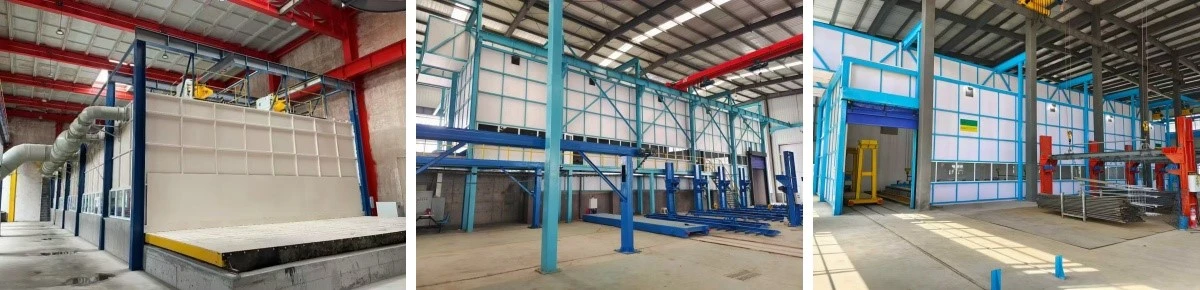
Name: Pre-treatment Cleaning Tank
Specification: The equipment is customized according to the maximum workpiece length, single-batch weight, and product type required by the user.
Overview:
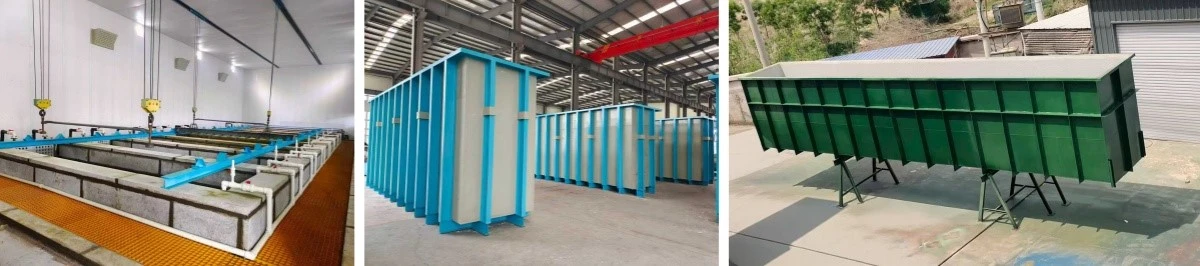
This tank is designed for pre-treatment cleaning of structural components, power fittings, steel pipes, profiles, and similar workpieces in hot-dip galvanizing processes.
The tank body can be constructed from various materials depending on operating conditions, including:
Corrosion-resistant granite + epoxy resin + fiberglass (FRP)
PP panels + steel structure + polyurea coating
Steel structure + PE polymer lining
Users can select the appropriate material configuration based on actual requirements. The material of the pre-treatment cleaning tank is consistent with that used in post-galvanizing cooling and passivation tanks.
Application Parameters
|
Application Position |
Material |
Energy Source |
Application Scope |
|
Workpiece Cleaning and Passivation |
Metal, PE, PP |
- |
Used for pickling, rinsing, fluxing, and passivation processes |
Transfer Drying Pit
Name: Drying Transfer Area
Specification: The equipment is customized according to the maximum workpiece length, single-batch weight, and product type required by the user.
Overview:
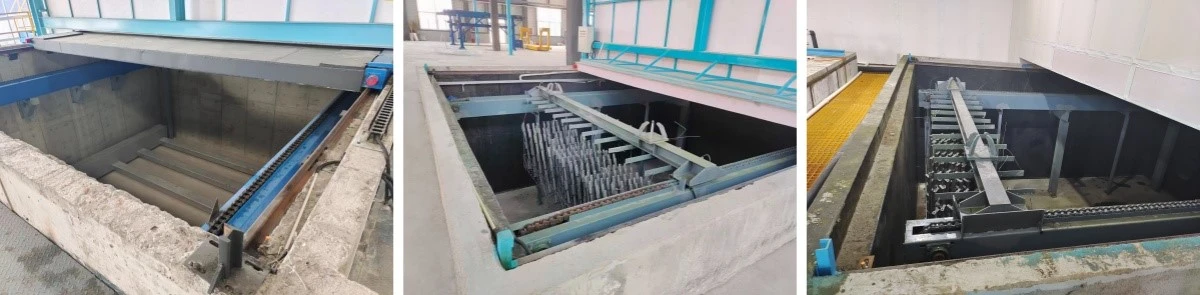
This system is designed for transferring workpieces after pre-treatment cleaning in hot-dip galvanizing processes, including structural components, power fittings, steel pipes, and profiles.
The transfer area is equipped with a stainless steel chain conveyor system, enabling continuous movement of workpieces. It transports pre-treated workpieces out of the enclosed pickling room for subsequent processing.
Application Parameters
|
Application Position |
Material |
Energy Source |
Application Scope |
|
Post-cleaning Transfer |
Stainless Steel |
Electricity |
Transfer of workpieces after cleaning process |
Zinc Pot Furnace
Name: Zinc Pot Furnace For Thin Coating Blown Hot dip Galvanizing Equipment
Specification: Customized according to the specifications of the user's zinc pot.
Overview:
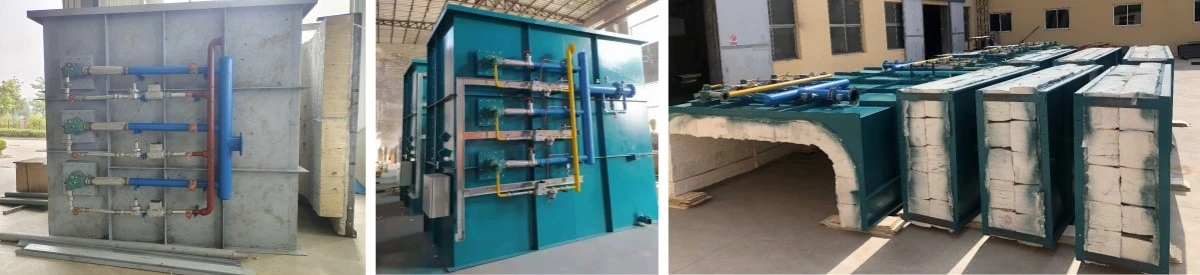
This furnace is designed for hot-dip galvanizing of structural components, power fittings, steel pipes, profiles, and similar workpieces, and is used in conjunction with the XG08 metal zinc pot.
The furnace adopts a modular structural design, ensuring easy installation and maintenance. The furnace body is lined with customized refractory ceramic fiber insulation, integrally formed according to the furnace shell dimensions. The specially designed ceramic fiber lining features high quality with minimal joints, providing excellent thermal insulation performance and long service life.
Application Parameters
|
Application Position |
Material |
Energy Source |
Application Scope |
|
Heating of Metal Zinc Pot |
Steel Structure + Insulation |
Natural Gas + Electricity |
Heating of zinc pot and coordinated exhaust treatment after fume collection |
Zinc Pot Burner
Name: Zinc Pot Burner For Thin Coating Blown Hot dip Galvanizing Equipment
Specification: Customized according to the specifications of the user's zinc pot.
Overview:
This burner system is designed for hot-dip galvanizing of structural components, power fittings, steel pipes, profiles, and similar workpieces, and is used in conjunction with the XG08 metal zinc pot furnace.
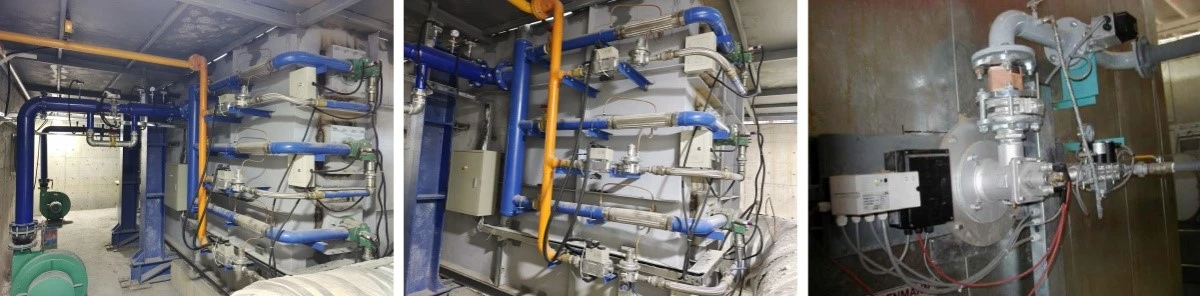
Burners are arranged diagonally within the combustion chamber to form a circular flame path, ensuring uniform heat distribution. Each high-speed pulse burner is equipped with an imported intelligent combustion controller, enabling precise control of ignition, heat output adjustment, and flame failure protection.
Each burner is fitted with an independent flame failure alarm device. The system operates under automatic control, featuring continuous flame monitoring and safety protections such as automatic shut-off of valves in case of flame-out or power failure.
Application Parameters
|
Application Position |
Material |
Energy Source |
Application Scope |
|
Zinc Pot Furnace |
Alloy |
Natural Gas + Electricity |
Automatic air-fuel ratio adjustment, high-speed combustion, and zinc pot heating |
Air Wiping System
Name: Hot-Dip Galvanizing Air Wiping System
Specification: Customized according to the user's workpiece specifications and production capacity requirements.
Overview:
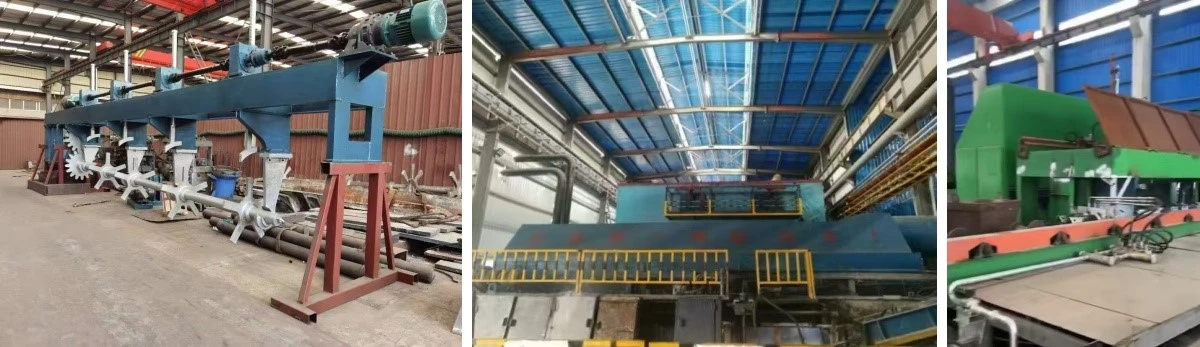
This system is designed for producing thin coating hot-dip galvanized products such as steel pipes, guardrails, and profiles in batch processing.
Workpieces are fed into the galvanizing drum via a loading machine for immersion in the molten zinc bath. Inside the zinc pot, built-in mechanisms adjust the orientation of the workpieces. Air knives are then used to blow off excess molten zinc from both internal and external surfaces, resulting in a uniform thin coating.
After galvanizing, the workpieces are discharged through an overturning mechanism into the water cooling tank, followed by passivation, marking, and packaging processes.
Application Parameters
|
Application Position |
Material |
Energy Source |
Application Scope |
|
Zinc Pot Galvanizing |
Alloy |
Electricity |
Batch processing of profiles for thin coating hot-dip galvanizing |
Product Advantages
1.Ultra-Precise Coating Control with High-Performance Air Wiping System
The defining feature of this equipment is its integration of a high-performance air wiping system, which enables the production of consistently thin and uniform coatings. As workpieces emerge from the zinc bath, they are immediately subjected to precisely controlled, high-velocity air knives that blow off excess molten zinc. This method offers superior control over the coating thickness compared to gravity drainage, achieving extremely smooth, even finishes. This is crucial for applications like steel pipes, guardrails, and profiles where dimensional accuracy, weight reduction, and aesthetic appearance are paramount.
2.Optimized Workflow for High-Volume Batch Production
The system is designed for a smooth, continuous material flow. The process begins with an efficient rail transfer cart and loading/unloading rack system that prepares and positions workpieces. A loading machine then feeds the workpieces into the galvanizing pot. Inside the zinc pot, built-in mechanisms adjust the orientation of the workpieces to ensure every surface is uniformly coated. An automatic overturning mechanism then transfers the galvanized products to the water cooling tank. This streamlined, automated workflow significantly reduces handling times, increases throughput, and minimizes labor costs.
3.Significant Reduction in Zinc Consumption and Material Savings
The air wiping system is not just about quality; it's also about economy. By precisely removing only the necessary amount of excess zinc, this line dramatically reduces zinc loss compared to traditional hot-dip methods that rely on gravity or simple mechanical wiping. The high-pressure air effectively strips off the surplus zinc, returning it to the bath. This results in a direct and substantial reduction in material costs, making the line highly cost-effective for large-scale production of thin-coated products with tight profit margins.
4.Adaptable and Scalable Modular Design for Diverse Products
This equipment is highly customizable and built on a modular platform. The specifications of key components such as the rail transfer cart, loading/unloading rack, galvanizing drum, and air wiping system can be tailored to accommodate a wide range of product types and sizes. Whether you are galvanizing long steel pipes, heavy guardrails, or intricate profiles, the system can be configured to handle your specific portfolio. This modularity also allows for easy future expansion or reconfiguration to meet changing market demands.
5.Robust Corrosion Protection for Long Service Life in Harsh Environments
All components exposed to the corrosive environment of the galvanizing process are constructed with durable, corrosion-resistant materials. The pickling room and pre-treatment tanks use FRP or UPVC linings. The cooling tower is made from FRP. The main structure is coated with polyurea or anti-corrosion resin paint. This robust construction ensures that the equipment delivers long-lasting, reliable performance, even in the demanding, high-temperature, high-humidity environment of a galvanizing plant, minimizing maintenance and replacement costs over the equipment's lifetime.
6.Superior Surface Finish for High-End Architectural and Industrial Products
The combination of the air wiping system and a well-controlled galvanizing process results in a superior surface finish. The thin, uniform coating eliminates common defects like runs, drips, and heavy buildup. The resulting product has a clean, bright, and smooth appearance that meets the high aesthetic standards of architectural and consumer products. This superior surface quality often allows for immediate downstream processing, such as painting or powder coating, without additional surface preparation.
7.Seamless Integration of Pre-Treatment and Galvanizing Processes
The line is designed with a logical, efficient flow from pre-treatment to final cooling. The enclosed pickling room, transfer drying pit, and zinc pot are arranged in a sequence that minimizes the distance the workpieces need to travel, reducing thermal loss and handling time. The stainless steel continuous chain conveyor in the transfer area ensures smooth movement of workpieces after cleaning, while the drying pit removes residual moisture, preventing zinc spattering and ensuring a high-quality coating with minimal defects.
FAQ
Q1: How does the air wiping system achieve such a uniform thin coating on long and complex profiles?
The air wiping system features air knives that are precisely positioned and shaped to match the profile of the workpiece. For complex shapes, multiple air knives can be arranged around the workpiece as it exits the zinc bath. The air pressure and flow rate are carefully controlled to create a uniform air curtain that applies an even stripping force across the entire surface. This ensures that even on long or intricate profiles, the excess zinc is removed uniformly, resulting in a consistent, thin coating from end to end.
Q2: What is the difference between the "blown" process of this line and a standard hot-dip galvanizing line?
In a standard hot-dip galvanizing line, the workpiece relies on gravity to drain excess zinc after it is withdrawn from the bath. This often results in a thicker, less uniform coating and can lead to drips and runs. The "blown" process incorporates an active air wiping system. The high-pressure air physically strips off the excess zinc while it is still molten, providing much greater control. This results in a significantly thinner, smoother, and more uniform coating, which is essential for precision applications.
Q3: What types of products is this line specifically designed for?
This line is ideally suited for batch processing of products that require a thin, uniform coating for dimensional precision or aesthetic reasons. Common applications include steel pipes for construction and furniture, guardrails for highways and buildings, various structural profiles (C-channels, I-beams), and sections for architectural use. It is also excellent for products that will be subsequently painted or powder coated, as the thin, uniform zinc layer provides an excellent base for further finishing.
Q4: How does the galvanizing drum inside the zinc pot contribute to coating quality?
The galvanizing drum is a critical component for workpieces that are not perfectly straight or that have complex geometries. As the workpiece is submerged in the molten zinc, the drum holds it in place. More importantly, the drum contains built-in mechanisms that can rotate or reposition the workpiece during the galvanizing process. This ensures that the molten zinc reaches all surfaces, including underneath and inside open sections, and that the workpiece is in the optimal orientation for the subsequent air wiping step, maximizing coating uniformity.
Q5: What are the key operational parameters that need to be controlled for the air wiping system?
The two most critical parameters are air pressure and air knife position. The air pressure determines the stripping force applied to the molten zinc; higher pressure results in a thinner coating. The position of the air knife relative to the workpiece is equally important. If it's too close, it may cause spattering; if too far, it will be ineffective. The air flow rate and the air's temperature can also be controlled. The system is typically calibrated for each product type, and these settings are stored in the control system for easy recall.
Q6: What is the function of the transfer drying pit in the overall process flow?
The transfer drying pit is located between the pre-treatment section and the zinc pot. After the workpieces have been cleaned and fluxed, they still retain some surface moisture. The drying pit, equipped with a stainless steel continuous chain conveyor and hot air circulation, removes this residual moisture before the workpieces enter the zinc bath. This is a critical step because any moisture entering the molten zinc would cause violent spattering, which is a safety hazard and can also cause coating defects. The drying pit ensures a safe and defect-free galvanizing process.
Hot Tags: thin coating blown hot dip galvanizing production line, China thin coating blown hot dip galvanizing production line manufacturers, suppliers, factory


