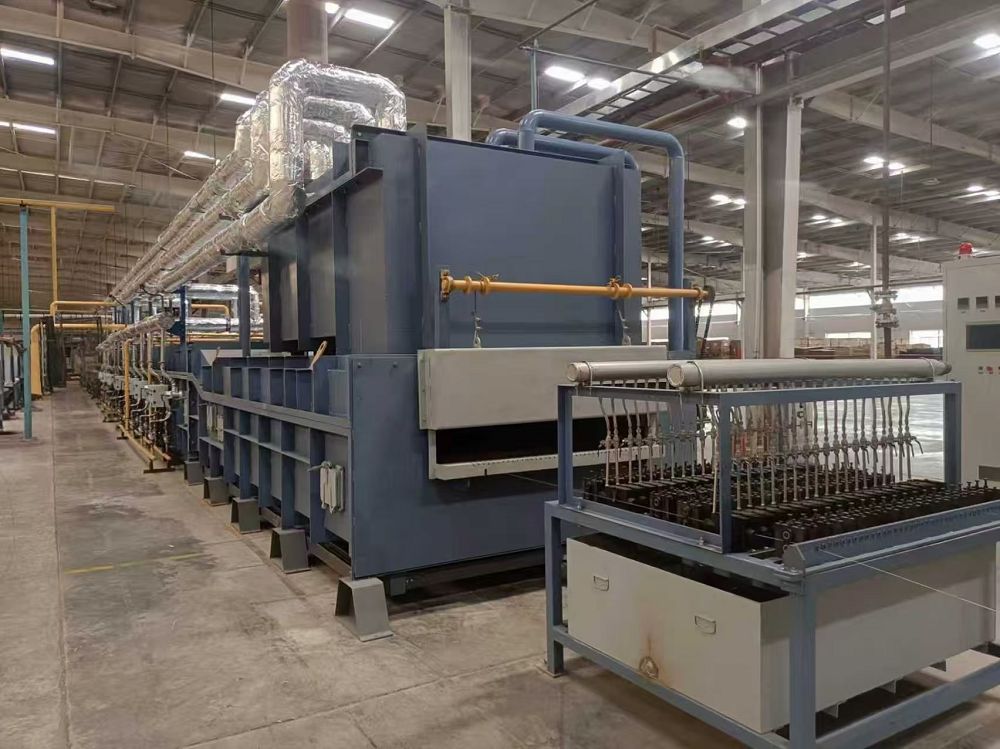
Hot-dip galvanizing (also known as hot-dip zinc coating) is an effective method of metal corrosion protection, widely used for metal structural facilities across various industries. The process involves immersing derusted steel components into molten zinc at 440–460°C, allowing a zinc layer to adhere to the surface and thereby provide corrosion resistance. For hot-dip galvanized iron wire, the standard minimum zinc coating thickness is 8 microns (or a coating mass of at least 60 g/m²), though typical thicknesses can exceed 300 microns. Common specifications for zinc coating mass include ranges such as 40–60 g/m², 70–90 g/m², and 240–280 g/m². The coating is thick and forms an interdiffusion layer with the base metal, resulting in excellent corrosion resistance that can last for decades in outdoor environments.
The typical production process for hot-dip galvanized iron wire includes steps such as wire rod preparation, wire drawing, annealing, derusting, pickling, galvanizing, plastic coating, and coiling. Hot-dip galvanizing evolved from older hot-coating methods; the process has a history spanning 140 years, dating back to its industrial application in France in 1836. However, the industry has seen large-scale expansion over the past thirty years, driven by the rapid development of hot-dip galvanized wire products.