


Rail Transfer Cart
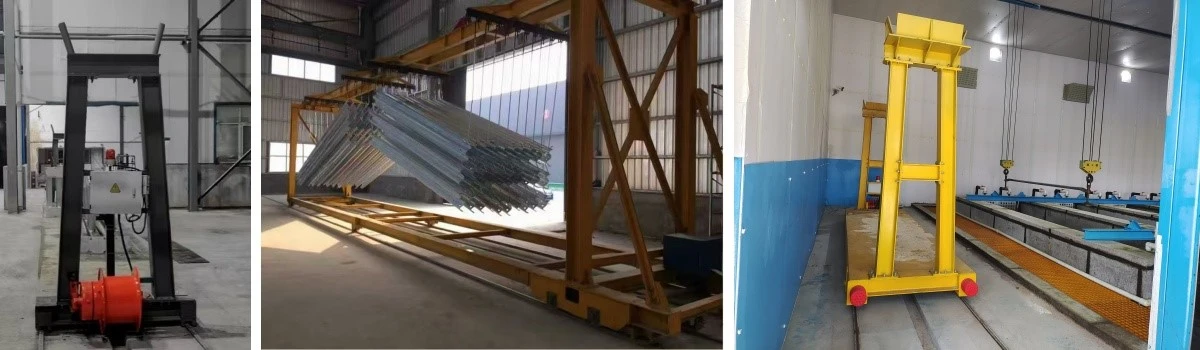
Name: Material Transfer Rail Cart
Specification: The equipment is customized according to the product type and load capacity required by the user.
Overview:
This transfer cart is suitable for handling hot-dip galvanized structural components, power fittings, steel pipes, profiles, and similar materials, with a load capacity ranging from 1 to 16 tons. The cart can be powered via cable or wireless power supply. Control options include a fixed control panel or remote control operation.
The cart features a welded steel structure with a surface coated in anti-corrosion resin paint. The drive system consists of an electric motor and a reduction gearbox.
Application Parameters
|
Application Position |
Material |
Energy Source |
Application Scope |
|
Transfer of Metal Black and White Parts |
Metal |
Electricity |
Transport of black parts into the pickling area and transfer of white parts |
Loading and Unloading Rack
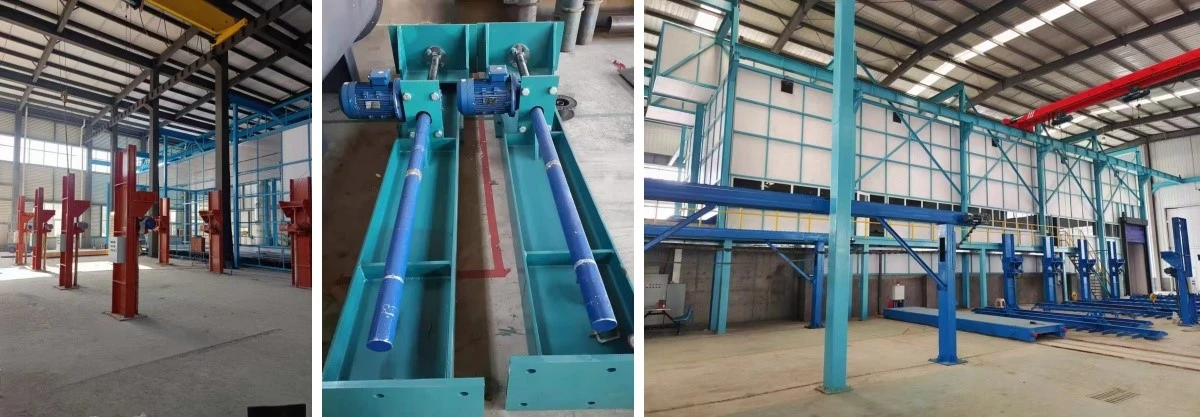
Name: Loading and Unloading Rack
Specification: The equipment is customized according to the maximum length, weight, and type of the workpieces.
Overview:
This equipment is suitable for loading and unloading hot-dip galvanized structural parts, power fittings, steel pipes, profiles, and similar materials. Workpieces to be galvanized are suspended on racks for pre-treatment preparation, while galvanized products are placed on the unloading rack for removal.
The loading and unloading rack is equipped with a lifting mechanism that can move up and down, making it convenient for hanging and removing workpieces.
Application Parameters
|
Application Position |
Material |
Energy Source |
Application Scope |
|
Workpiece Loading and Unloading |
Metal |
Electricity |
Loading of black parts and unloading of white parts |
Pickling Room
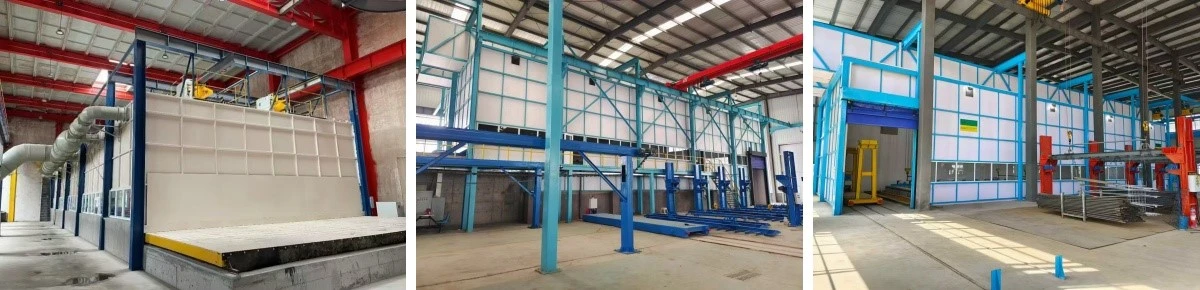
Name: Enclosed Pickling Room For Structural Components Hot dip Galvanizing Production Line
Specification: The equipment is customized according to the maximum workpiece length and lifting height required by the user.
Overview:
This system is designed for the pre-treatment of workpieces such as hot-dip galvanized structural components, power fittings, steel pipes, and profiles. All pre-treatment processes including pickling, rinsing, and fluxing are enclosed within a sealed room, effectively isolating the pre-treatment area from the main workshop and minimizing the emission of harmful gases.
The enclosure is constructed with a steel structure, coated externally with polyurea or anti-corrosion resin paint, and internally lined with FRP or UPVC panels for corrosion resistance. An acid fume neutralization and filtration tower is installed outside the enclosure to absorb and treat acidic gases before discharge.
Application Parameters
|
Application Position |
Material |
Energy Source |
Application Scope |
|
Exhaust Gas Protection for Pre-Treatment Tanks |
Metal and UPVC |
- |
Collection and controlled discharge of exhaust gases generated during pre-treatment processes |
Pre-treatment Tank
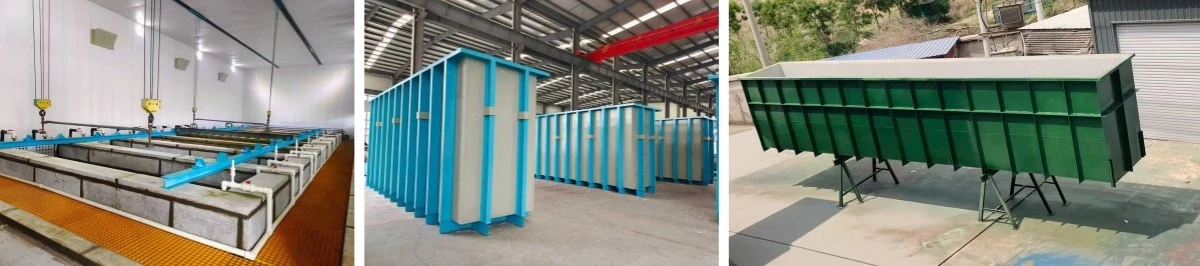
Name: Pre-treatment Cleaning Tank
Specification: The equipment is customized according to the maximum workpiece length, single load weight, and product type required by the user.
Overview:
This tank is suitable for pre-treatment cleaning of hot-dip galvanized structural components, power fittings, steel pipes, profiles, and similar workpieces.
The tank can be manufactured using various materials depending on operating conditions, including corrosion-resistant granite combined with epoxy resin and FRP, PP plates with steel structure and polyurea coating, or steel structure with PE polymer lining. Users can select the appropriate material based on actual requirements.
The materials used for the pre-treatment cleaning tank are consistent with those used in post-galvanizing water cooling tanks and passivation tanks.
Application Parameters
|
Application Position |
Material |
Energy Source |
Application Scope |
|
Workpiece Cleaning and Passivation |
Metal, PE, PP |
- |
Suitable for pickling, rinsing, fluxing, and passivation processes of workpieces |
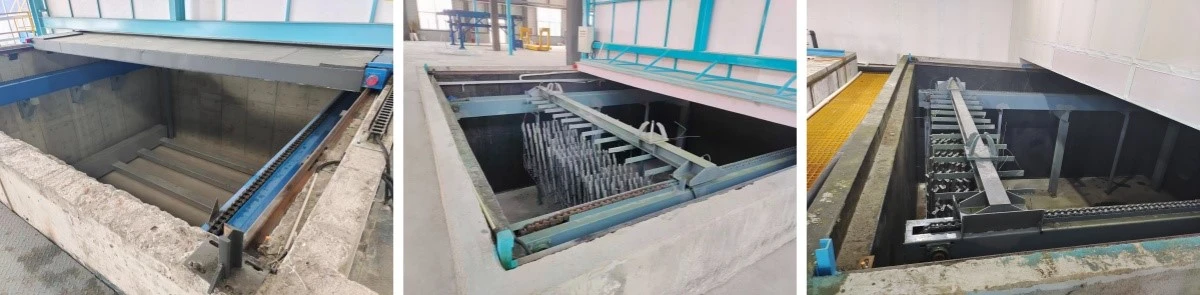
Material Transfer Drying Pit
Name: Drying Transfer Area For Structural Components Hot dip Galvanizing Production Line
Specification: The equipment is customized according to the maximum workpiece length, single load weight, and product type required by the user.
Overview:
This area is designed for transferring hot-dip galvanized structural components, power fittings, steel pipes, profiles, and similar workpieces after pre-treatment cleaning. The transfer area is equipped with a stainless steel continuous chain conveyor at the front, which moves the pre-treated workpieces out of the enclosed pickling room for subsequent processing.
Application Parameters
|
Application Position |
Material |
Energy Source |
Application Scope |
|
Post-Cleaning Transfer |
Stainless Steel |
Electricity |
Transfer of workpieces after pre-treatment cleaning |
Enclosed Dust Cover
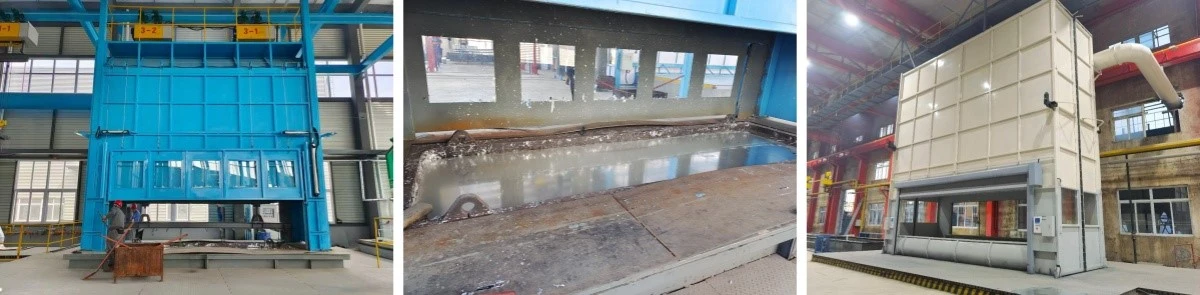
Name: Enclosed Dust Hood For Structural Components Hot dip Galvanizing Production Line
Specification: The equipment is customized according to the zinc pot dimensions and production requirements.
Overview:
This system is designed for hot-dip galvanizing of structural components, power fittings, steel pipes, profiles, and similar workpieces. Zinc fumes generated during the galvanizing process are collected through suction at the side of the zinc pot and the top of the enclosed dust hood, ensuring controlled exhaust.
The zinc fume collection chamber features sealed entry and exit doors for workpieces, operated pneumatically. Automatic lift doors are installed on both sides of the working surface, which can be opened for ash removal and cleaning.
Application Parameters
|
Application Position |
Material |
Energy Source |
Application Scope |
|
Above Zinc Pot |
Steel Structure |
Electricity and Pneumatics |
Controlled collection and exhaust of zinc fumes generated during galvanizing |
Zinc Pot Furnace
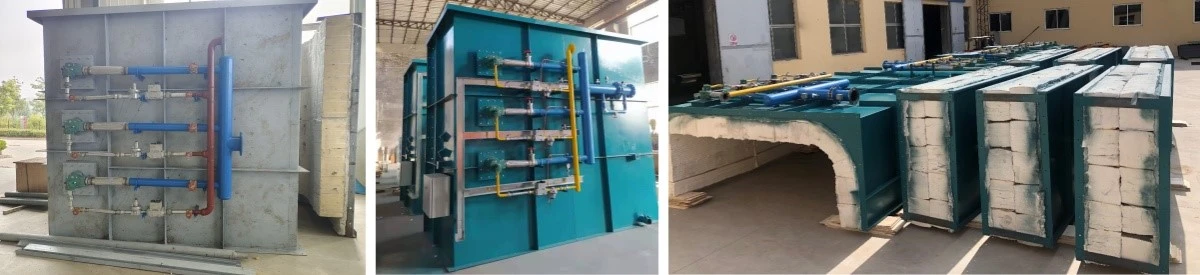
Name: Galvanizing Furnace for Zinc Pot
Specification: The equipment is customized according to the zinc pot dimensions and production requirements.
Overview:
This furnace is designed for hot-dip galvanizing of structural components, power fittings, steel pipes, profiles, and similar workpieces, and is used in conjunction with an XG08 metal zinc pot.
The galvanizing furnace adopts a modular structure, allowing for easy installation. The furnace body is lined with customized refractory ceramic fiber insulation, which is integrally formed according to the furnace shell dimensions. The specially designed refractory ceramic fiber lining ensures high quality with fewer joints, improving thermal efficiency and durability.
Application Parameters
|
Application Position |
Material |
Energy Source |
Application Scope |
|
Heating of Metal Zinc Pot |
Steel Structure with Insulation |
Natural Gas and Electricity |
Heating of zinc pot and coordinated exhaust treatment after fume collection |
Zinc Pot Burner
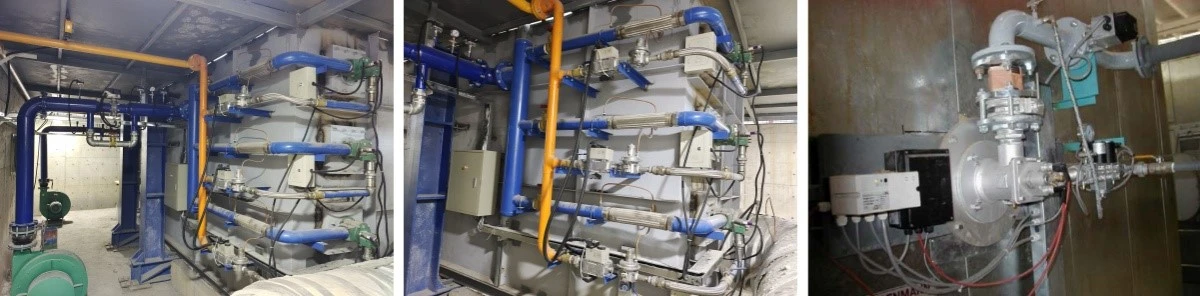
Name: Zinc Pot Burner
Specification: The equipment is customized according to the zinc pot dimensions and production requirements.
Overview:
This system is designed for hot-dip galvanizing of structural components, power fittings, steel pipes, profiles, and similar workpieces, and is used in conjunction with an XG08 metal zinc pot furnace.
Burners are arranged diagonally within the combustion chamber to form a circular flame path. Each high-speed pulse burner is equipped with an imported intelligent combustion controller, enabling ignition, power regulation, and flame failure protection for each burner. Flame monitoring and alarm functions are provided for every burner. The combustion system operates under automatic control, featuring flame-out detection and automatic gas shut-off in case of power failure, ensuring safe and stable operation.
Application Parameters
|
Application Position |
Material |
Energy Source |
Application Scope |
|
Zinc Pot Furnace |
Alloy |
Natural Gas and Electricity |
Automatic air-fuel ratio adjustment, high-speed combustion, and heating of the zinc pot |
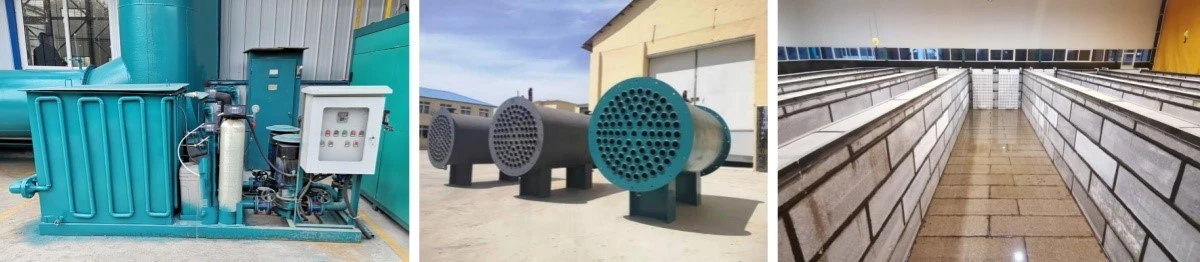
Zinc Pot Furnace Exhaust Heat Recovery System
Name: Zinc Pot Furnace Exhaust Gas Heat Recovery System
Specification: The equipment is customized according to the exhaust gas volume of the zinc pot furnace.
Overview:
This system utilizes the high-temperature flue gas discharged after heating the zinc pot to recover waste heat. Through a two-stage heat exchange process, the residual heat in the flue gas is converted into usable thermal energy to meet process temperature requirements, improve production efficiency, and enhance the working environment. It also contributes to energy saving, emission reduction, and low-carbon operation.
A modular high-efficiency tubular heat exchanger is installed in the flue duct to recover waste heat from flue gas at temperatures of 466 to 518 degrees Celsius. The recovered heat is used to raise water temperature to approximately 90 degrees Celsius. Through a heat storage tank with insulation, along with pipelines, a titanium alloy heat exchanger, high-temperature pumps, and an electrical control cabinet, the system transfers heat to the flux solution tank, maintaining it at the optimal process temperature.
Application Parameters
|
Application Position |
Material |
Energy Source |
Application Scope |
|
Furnace Exhaust Gas |
Heat-Resistant Steel |
- |
Recovery of furnace exhaust heat and heating of pre-treatment tank solutions |
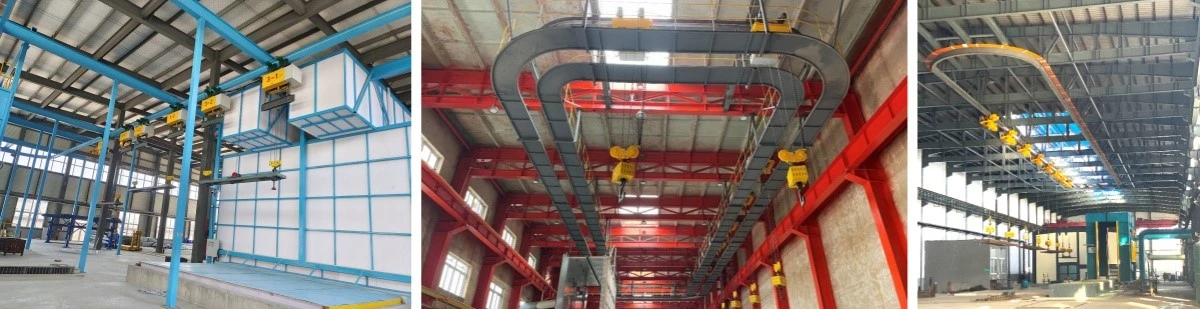
Hot-Dip Galvanizing Circular Rail
Name: Circular Rail Hoist for Hot-Dip Galvanizing
Specification: The equipment is customized according to the workpiece size and lifting capacity required by the user.
Overview:
This system is designed for handling hot-dip galvanized structural components, power fittings, steel pipes, profiles, and similar workpieces. The galvanizing process adopts a circular rail system, with 3 to 4 sets of explosion-proof galvanizing hoists arranged along the track, each using a four-rope single-line configuration. The lifting capacity of each hoist ranges from 3 to 8 tons.
The hoist travel rails are installed beneath the main workshop beams, with maintenance access reserved between the rails and the enclosed dust hood. The electric hoists are of a single-line type with a protection rating of IP65. The control system supports both automatic and manual operation modes.
Application Parameters
|
Application Position |
Material |
Energy Source |
Application Scope |
|
Hot-Dip Galvanizing Bath |
Steel Structure and Metal |
Electricity |
Orderly handling and transfer of workpieces throughout the galvanizing process |
Metal Zinc Pot
Name: XG08 Metal Zinc Pot For Structural Components Hot dip Galvanizing Production Line
Specification: The equipment is customized according to the workpiece specifications and production capacity required by the user.
Overview:
This zinc pot is designed for hot-dip galvanizing of structural components, power fittings, steel pipes, profiles, and similar workpieces. It is fabricated from XG08 special steel plates supplied by Ansteel, with a plate thickness of 60 mm.
The pot features a round-bottom and rounded-corner structure, along with a primary rim and secondary rim design, ensuring excellent structural stability, no deformation, and long service life.
On the diagonal sides of the pot, corresponding to the burner positions, 310S stainless steel plates are installed from top to bottom as fire-resistant liners. These liners prevent localized overheating near the burners and protect the zinc pot from damage. The 310S stainless steel plates are securely fastened with stainless steel bolts, ensuring strong integrity, resistance to detachment, and extended service life. This design effectively enhances the durability of the zinc pot and ensures uniform temperature distribution of the molten zinc.
Application Parameters
|
Application Position |
Material |
Energy Source |
Application Scope |
|
Hot-Dip Galvanizing Bath |
XG08 Steel |
- |
Used for hot-dip galvanizing, with a molten zinc capacity of 260 to 1800 tons |

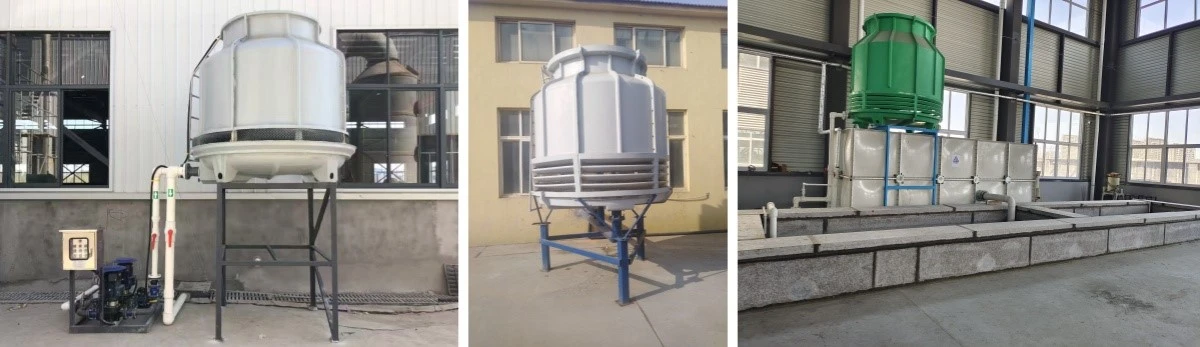
Cooling Tower
Name: Cooling Tower
Specification: The equipment is customized according to the specifications of the user's water-cooling tanks.
Overview:
The cooling tower is designed for reducing the temperature of water in post-hot-dip galvanizing processes for structural components, power fittings, steel pipes, profiles, and similar workpieces. The cooling system includes a temperature control unit that continuously monitors water temperature. When the temperature exceeds 50°C, the system activates the hot water circulation pump.
In winter, the cooling water can be circulated to pre-treatment tanks for heating, while in summer, the water is pumped to the cooling tower for forced cooling before returning to the cooling tanks. The system is also equipped with a soft water system. In case of water spotting issues on galvanized surfaces, the system allows manual switching to soft water for improved surface quality.
Application Parameters
|
Application Position |
Material |
Energy Source |
Application Scope |
|
Post-Galvanizing Water-Cooling Tank |
Fiberglass |
Electricity |
Rapid reduction of water temperature |
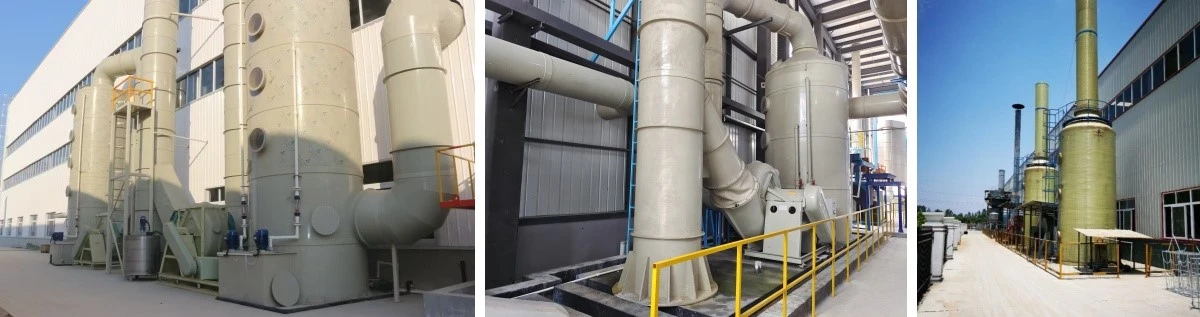
Acid Mist Tower
Name: Acid Mist Tower
Specification: Customized according to the dimensions of the user's enclosed acid pickling room.
Overview:
The acid mist tower is designed to treat exhaust gases generated from hydrochloric acid cleaning during hot-dip galvanizing pre-treatment, as well as steam and vapor from water washing and fluxing processes. The system uses a water spray absorption method to capture and neutralize acid mist.
The working principle involves passing the collected acid-laden exhaust gas through a counterflow spray of absorbent water solution, achieving purification and removal of acid mist. The absorption liquid is periodically replenished into the acid tank for reuse in the pickling process. During normal operation, the liquid is continuously circulated via a water pump for spraying.
Application Parameters
|
Application Position |
Material |
Energy Source |
Application Scope |
|
Pre-Treatment Acid Pickling Room |
PP / Fiberglass |
Electricity |
Treatment and orderly discharge of exhaust gases from the pre-treatment pickling process |
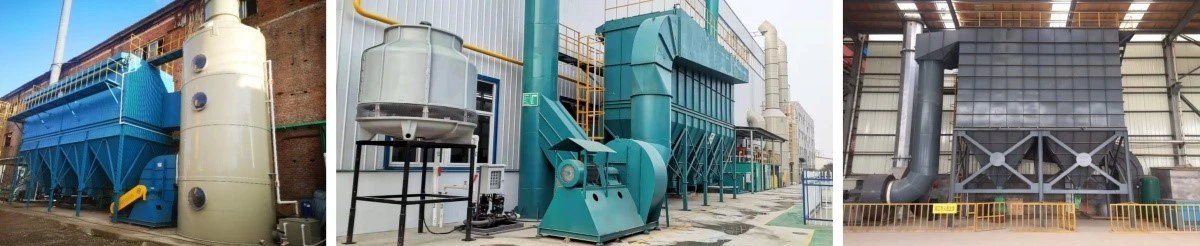
Dust Removal Equipment
Name: Dust Collector with Ammonia Scrubber
Specification: Customized according to the dimensions of the user's zinc pot.
Overview:
The system is designed to treat and discharge smoke, dust, and fumes generated during the hot-dip galvanizing process in compliance with environmental standards.
The bag-type dust collector features an optimized pulse-jet cleaning system. Unlike conventional dust collectors that only blow compressed air into the bag cage once, this design allows the filter bags to expand during the air pulse and contract when the air stops, effectively achieving a double-shake effect for superior dust removal.
The maximum particulate emission concentration is 120 mg/m³, and for a 15-meter high exhaust stack, the maximum allowable particulate emission rate is 3.5 kg/h.
An ammonia scrubber tower is connected at the dust collector outlet to neutralize ammonia contained in the smoke and dust, ensuring safe discharge.
Application Parameters
|
Application Position |
Material |
Energy Source |
Application Scope |
|
Zinc Pot Dust & Ammonia Removal |
Carbon Steel + PP |
Electricity |
Located above zinc pot, orderly treatment and discharge of smoke, dust, and exhaust gases |
Wastewater Treatment Equipment
Name: Wastewater Treatment Equipment
Specification: The system is customized according to the volume of wastewater generated from the user's pre-treatment tanks.
Overview:
Rinsing wastewater from the workshop is pumped into an aeration equalization tank, where air is introduced by a blower to regulate flow, homogenize water quality, and provide pre-oxidation. The effluent then flows into a neutralization reaction tank.
This type of wastewater is typically acidic and contains suspended solids. Under appropriate pH conditions, hydroxide precipitation occurs. When the pH is adjusted above 5.2, the precipitation reaction is largely completed. However, due to the potential release of soluble iron under acidic conditions, the neutralized and coagulated wastewater is further treated in an aeration reaction tank to form stable Fe(OH)₃ precipitates.
After sufficient oxidation, stable ferric hydroxide is formed and flows into a flocculation reaction tank, where a flocculant such as PAM is added. The chemicals are thoroughly mixed with the wastewater, and colloidal hydroxide particles aggregate into larger flocs through adsorption and bridging, facilitating effective solid-liquid separation.
Application Parameters
|
Application Position |
Material |
Energy Source |
Application Scope |
|
Pre-Treatment Rinsing Tank |
Carbon Steel and PP |
Electricity |
Treatment and purification of rinsing wastewater from pre-treatment processes |

Flux Solution Iron Removal System
Name: Flux Solution Iron Removal System
Specification: The equipment is customized according to the volume of flux solution in the user's pre-treatment flux tank.
Overview:
This system is designed for hot-dip galvanizing of structural components, power fittings, steel pipes, profiles, and similar workpieces. It is used to treat the flux solution in the pre-treatment process, with equipment capacity matched to the volume of the flux tank.
Practical data shows that excessive ferrous chloride (FeCl₂) concentration in the flux solution significantly affects zinc consumption and the surface quality of workpieces. By reducing the iron ion content in the flux solution, this system can effectively lower zinc consumption by 5 to 30 percent overall, typically reducing zinc usage by 3 to 10 kg per ton of workpieces.
With reduced iron content, the fluidity of the molten zinc improves, resulting in better surface quality of the galvanized workpieces and minimizing defects such as zinc runs and spikes.
Application Parameters
|
Application Position |
Material |
Energy Source |
Application Scope |
|
Pre-treatment Flux Tank |
Carbon Steel and Corrosion-Resistant Materials |
Electricity |
Removal of iron ions from flux solution to improve galvanizing quality and reduce zinc consumption |

Product Advantages
1.Superior Heavy-Duty Handling Capacity for Industrial-Scale Production
This galvanizing line is engineered for large-scale industrial applications, featuring robust rail transfer vehicles with a load capacity ranging from 1 to 16 tons.The system enables safe and efficient transportation of large structural components, including steel beams, steel columns, and heavy-duty electrical fittings.The galvanizing hoist control system supports multiple operating modes, including wired control, wireless remote control, manual operation, and automatic operation, providing maximum flexibility and improved operator safety when handling heavy and irregularly shaped workpieces.Designed to accommodate the significant weight and dimensions typical of structural steel products, the system ensures smooth, stable, and reliable material flow throughout the entire hot-dip galvanizing process.
2.Complete Environmental Enclosure for Worker Safety and Regulatory Compliance
The line incorporates a fully enclosed pickling room that isolates all pre-treatment processes-pickling, rinsing, and fluxing-from the main workshop. This sealed environment, constructed with a steel structure coated with polyurea or anti-corrosion resin paint and internally lined with FRP or UPVC panels, effectively contains harmful acid fumes. An external acid mist tower with a water spray absorption system neutralizes and filters these gases before discharge. This design ensures a safe, healthy working environment and guarantees compliance with the most stringent environmental and occupational safety regulations.
3.Energy-Efficient Design with Advanced Heat Recovery
The system features a zinc pot furnace exhaust heat recovery system, a key element of its sustainable design. This system captures high-temperature flue gas (466-518°C) from the furnace and uses a two-stage modular high-efficiency tubular heat exchanger to recover waste heat. This recovered thermal energy is utilized to heat the flux solution in the pre-treatment tank to its optimal operating temperature. This process significantly reduces energy consumption by reusing waste heat, lowers the plant's carbon footprint, and cuts operational costs associated with heating the flux solution.
4.Advanced Emissions Control for Zinc Fumes and Dust
The zinc pot is equipped with a sophisticated enclosed dust hood that captures fumes and particulates at the source. The hood uses a combination of side suction from the upper edge of the zinc pot and top suction from the hood to ensure that zinc fumes generated during the dipping process are effectively collected. The fume collection chamber features pneumatically operated sealed doors for workpiece entry and exit. The collected fumes are then routed to a bag-type dust collector with pulse-jet cleaning and an ammonia scrubber tower, ensuring the released air meets environmental standards.
5.Superior Zinc Pot Design for Extended Service Life
The metal zinc pot is manufactured from high-quality XG08 special steel plate, which is widely recognized for its excellent resistance to corrosion in molten zinc environments.The pot features a rounded bottom and curved corner design, effectively reducing stress concentration and preventing deformation under high-temperature operating conditions.In addition, 310S stainless steel refractory plates are installed diagonally on the exterior of the pot to protect the structure from intense burner heat exposure.Combined with reinforced main and secondary edge designs, this durable construction ensures a reliable service life of approximately 5–8 years, providing stable operation and long-term production performance for industrial hot-dip galvanizing applications.
6.Integrated Waste Management for Full-Process Stewardship
This comprehensive line includes dedicated wastewater treatment equipment and a flux solution iron removal system. The wastewater treatment plant uses aeration, neutralization, coagulation, and flocculation to treat acidic rinse water, producing clean effluent suitable for discharge. The flux iron removal system continuously purifies the flux solution by oxidizing and removing iron ions (Fe²⁺), which significantly improves galvanizing quality, reduces zinc consumption by 5-30%, and lowers overall operating costs. These systems demonstrate a commitment to full-process environmental stewardship.
FAQ
Q1: What is the maximum size of structural component that can be handled by this production line?
The line is highly customizable, but the rail transfer cart has a load capacity of 1 to 16 tons. The maximum length and width of the workpieces are determined by the dimensions of the pre-treatment tanks and the zinc pot, which are also custom-built based on your specifications. We design the system to accommodate your largest and heaviest workpieces, ensuring the entire process, from loading to unloading, can be performed efficiently and safely. Please provide your specific workpiece dimensions for a detailed engineering assessment.
Q2: How does the enclosed dust hood above the zinc pot ensure effective fume collection?
The dust hood uses a combination of side suction and top suction. The side suction draws fumes horizontally from the surface of the zinc pot, capturing the initial plume of smoke as the workpiece enters the bath. The top suction provides a vertical draft to capture any fumes that rise or escape the side suction. The hood's structure creates a negative pressure zone over the pot. The pneumatically operated doors at the entry and exit points maintain a seal, preventing fumes from leaking into the workshop and ensuring all emissions are routed to the dust collector and ammonia scrubber for treatment.
Q3: What is the specific benefit of the flux solution iron removal system in terms of cost and quality?
Iron ions (Fe²⁺) accumulate in the flux solution over time from the pickled steel. A high concentration of these ions causes the flux to become less effective and leads to a chemical reaction that consumes zinc, increasing your material costs. The iron removal system continuously purifies the flux by oxidizing and precipitating the iron ions, maintaining a low Fe²⁺ concentration. This reduces zinc consumption by 5-30%, lowers production costs, and also improves the fluidity of the zinc in the bath, resulting in a smoother, higher-quality surface finish with fewer defects like runs and spikes.
Q4: How does the wastewater treatment equipment operate to ensure compliance?
The wastewater from rinsing operations is first collected in an equalization tank where aeration is used to homogenize the water quality. It then flows into a neutralization reaction tank where a pH adjuster is added to create alkaline conditions, causing metal hydroxides to precipitate. The water then enters a flocculation reaction tank where a polymer is added to help the fine precipitates clump together into larger, settleable flocs. These flocs are then separated from the water, which is now clean enough for discharge, while the sludge is collected for proper disposal. The system is designed to meet local and national discharge regulations.
Q5: What maintenance is required for the XG08 metal zinc pot to achieve its 5-8 year lifespan?
To maximize the lifespan of the XG08 zinc pot, regular maintenance is essential. This includes daily checking of the pot's temperature and the burner's performance to prevent localized overheating. Regular inspections of the pot's walls for thinning or cracking should be performed. The 310S fire-resistant plates should also be inspected for wear and securely fastened. It is also crucial to carefully manage the zinc composition in the bath and regularly remove any zinc-iron dross that accumulates. Following a scheduled maintenance program will help achieve the projected service life.
Hot Tags: structural components hot dip galvanizing production line, China structural components hot dip galvanizing production line manufacturers, suppliers, factory


